Article: Fine Art Photography and Gilding: How Gold Inspires Contemporary Art in Canada
Fine Art Photography and Gilding: How Gold Inspires Contemporary Art in Canada

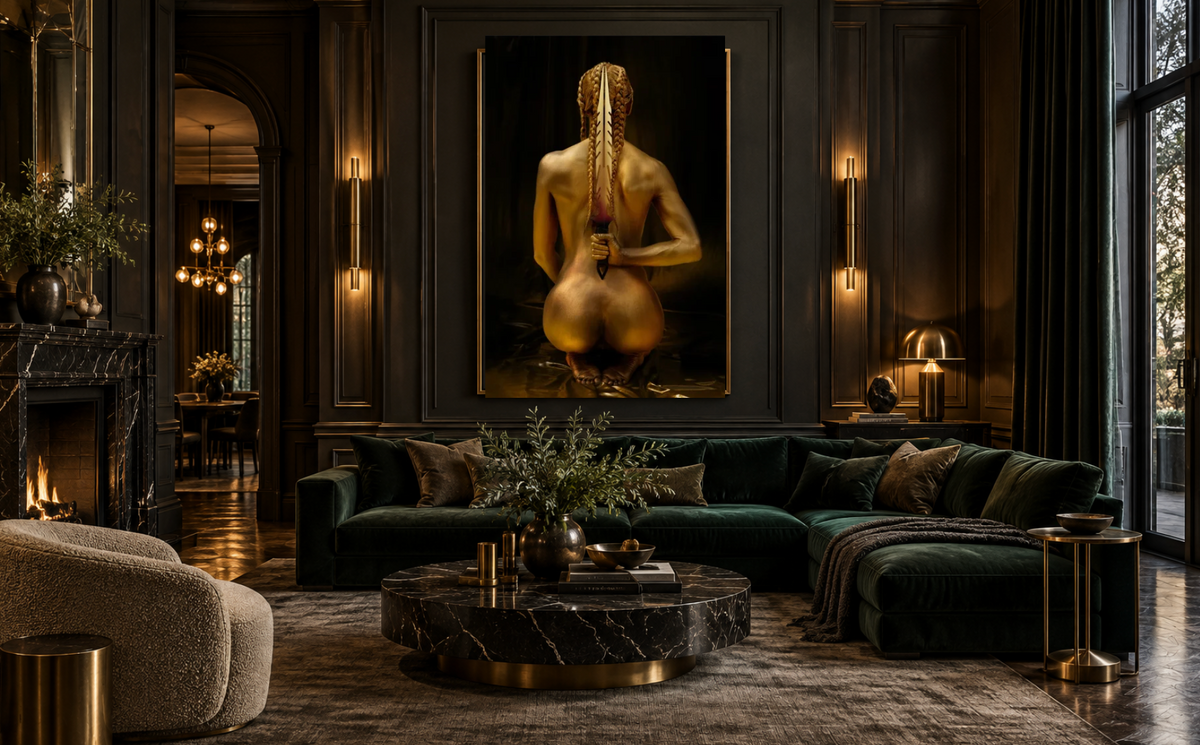
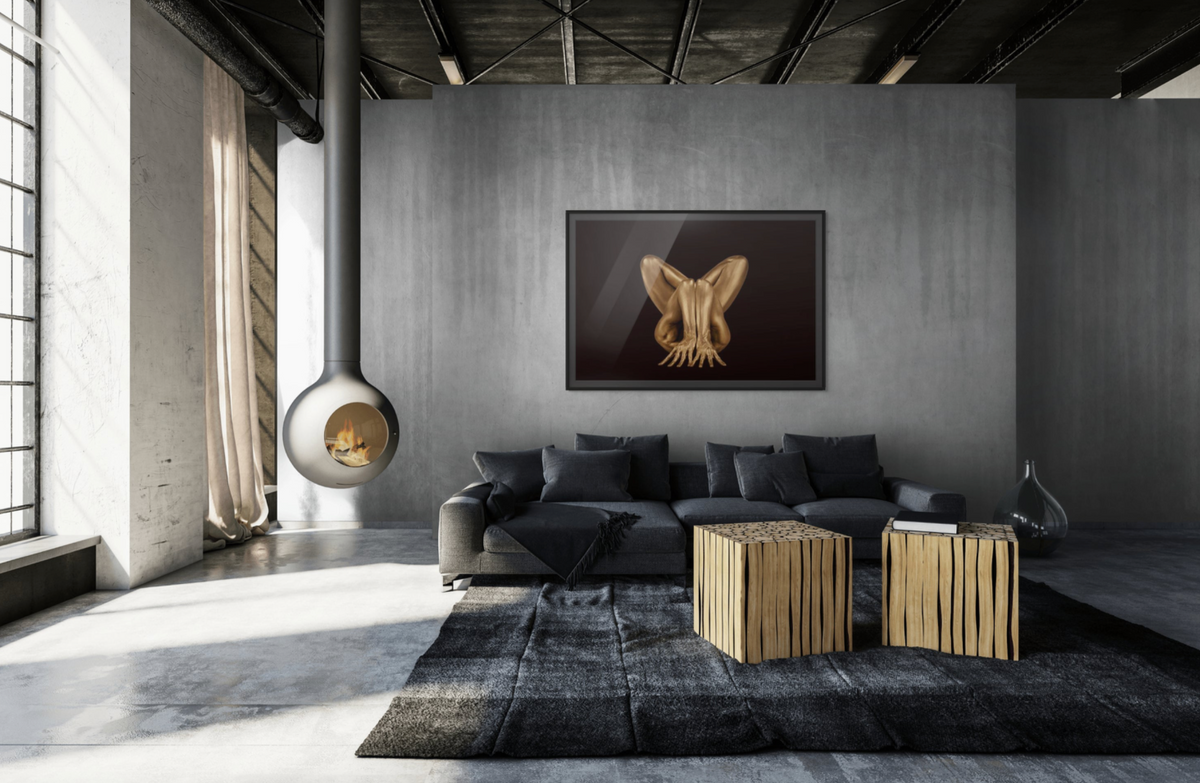
Hidden Horus by Zack Zublena, displayed in a contemporary interior setting exploring the interplay between gold, sculptural form, and light. View Hidden Horus and available formats.
Gold possesses an extraordinary power: transforming the perception of any surface. It captures light, accentuates delicate contours, and grants a work a unique presence that transcends physical materiality. In Canada, major cultural institutions such as the National Gallery of Canada preserve historic collections reflecting a profound national appreciation for refined fine art and material craftsmanship.
For French-American photographer Zack Zublena, this rich artistic heritage serves as an inexhaustible source of creative reflection. His golden figures explore the intimate relationship between the human body, light, and metamorphosis. His work anchors itself within contemporary photographic practice in constant dialogue with the timeless history of gold.
Whether in a historic Victorian home in Toronto, a contemporary glass-and-wood residence in Vancouver, or an elegant heritage property in Montreal, understanding the art of gilding illuminates how contemporary creators reinterpret this visual legacy to enrich exclusive living spaces.
What is gilding in art and design?
Gilding involves applying an ultra-thin layer of gold onto a supporting substrate such as wood, stone, or metal. A gilded object possesses an internal structure; its radiant surface does not imply that the entire piece is fashioned from solid gold.
The extraordinary malleability of gold makes this technique possible by enabling it to be beaten into microscopic leaves. Heritage portals and cultural authorities, such as the Department of Canadian Heritage, document and support the preservation of foundational artistic skills and traditional decorative techniques.
This technical distinction is fundamental for appreciating fine art: a solid gold heirloom, a surface enriched with gold leaf, and a living sculptural capture embody radically different craft and creative approaches.
The legacy of gold in Canadian cultural heritage and criticism
The tradition of working with precious metals encompasses a multiplicity of manual processes rather than a single universal method. Masters and creators have adapted metal treatment to respond to the specific nature of each piece.
Cultural coverage in prominent national newspapers, such as The Globe and Mail, consistently reflects how the Canadian art circuit fosters a living dialogue between ancestral techniques and contemporary vision.
To fully appreciate a work of art, one must examine its documented materials, composition, and context. The golden surface is never a simple superficial ornament, but rather a constitutive component of the artistic vision.
Why gold carries a sacred and timeless significance
Historically, gold has been inextricably associated with the sun, eternity, and the sacred. Its unalterable luster made it the premier material for ritual objects and symbols of supreme authority.
These historical resonances endure in high-end interior architecture. As highlighted by influential design publications such as Style at Home, the integration of reflective metallic finishes introduces warm depth and timeless elegance to contemporary residential spaces.
In Zack Zublena's photography, gold is liberated from its function as a mere symbol of material wealth, elevating itself into a vehicle for pure emotion and sculptural plasticity.
How the golden surface reveals the human form
One of the most captivating effects of gilding lies in the dynamic dialogue between the reflective film and the underlying physical volume. Light sculpts a face, outlines an anatomical curve, or emphasizes a suspended gesture.
Art critics in cultural sections of major national publications like The Toronto Star frequently highlight how focused illumination and contrasting textures heighten the visual impact of fine art photography in interior settings.
In Zack Zublena's practice, it is precisely this relationship between surface and structure that defines the photograph's aesthetic. The golden tone draws the eye, while the model's posture and expression grant the piece profound human depth.
The contemporary golden language according to Zack Zublena
Zack Zublena began his exploration of golden human sculptures in Los Angeles, subsequently captivating discerning collectors across Canada and internationally. His artistic process unifies real-life models, reflective gold body art, rigorous composition, and meticulously calibrated studio lighting.
Through the photographic medium, the body acquires an authentic sculptural dimension. The curve of a back captures a warm reflection, a restrained posture evokes silent tension, and a serene gaze establishes deep intimacy. The golden finish amplifies these resonances while keeping the individual at the emotional core.
The artwork Hidden Horus perfectly illustrates this contemporary vision. Its radiant golden tones serve as a magnificent focal point for prestigious interiors in Toronto, Vancouver, or Montreal.
Integrating golden fine art into Canadian residential spaces
A fine art photograph with rich golden undertones dialogues harmoniously with the noble materials of contemporary Canadian architecture—whether warm cedar and timber accents, expansive concrete, natural stone, or minimalist modern framing.
Design trends featured by lifestyle platforms like Canadian Living demonstrate how the thoughtful addition of metallic accents transforms an accent wall into a masterpiece of architectural luxury.
When selecting a piece for your home, consider scale and emotional resonance. A contemplative silhouette brings balance to a private study, while a dynamic gesture powerfully structures an open-concept living area.
Dimensions and viewing distance are equally decisive. A large-format standalone piece anchors a wall with authority, whereas a diptych or triptych composition instills a balanced visual rhythm.
For expert framing and layout guidance, we invite you to consult Zack Zublena's guide on diptychs, triptychs, and multi-panel photography.
A millenary material, a living artistic dialogue
The art of gilding proves that the delicate application of gold magnifies the visual and symbolic value of a creation. Its power rests on artisanal mastery, material integrity, and aesthetic vision.
Zack Zublena's photography prolongs this living contemporary dialogue, investigating why gold instinctively draws our gaze toward the human form. Light initiates the encounter, and gesture grants it timeless permanence.
Explore the Golden Souls collection and discover all available works by Zack Zublena. To discuss a custom project or acquire an exclusive piece, please get in touch with Zack Zublena.
Frequently Asked Questions
What is gilding in fine art?
Gilding is the application of a thin layer of gold onto a substrate such as wood, stone, or metal. Historical examples encompass a wide variety of decorative objects adapted across different cultural eras.
Were historical golden surfaces always made of pure 24-karat gold?
No. Ancient gold frequently contained silver and copper alloys that altered its hue and warmth. Purity standards vary significantly across different historical pieces.
Does Zack Zublena recreate historical gilding techniques?
His portfolio belongs to contemporary fine art photography. The tradition of historical gilding acts here as a profound source of aesthetic inspiration within an independent auteur practice.
Do photographic prints contain real physical gold?
The golden tones in the photographs translate the visual brilliance captured during live studio sessions. Standard fine art prints do not include actual gold leaf unless specifically arranged for a bespoke finish.
Is 24-karat gold leaf available for custom photographic experiences?
Yes, the incorporation of genuine 24-karat gold leaf is possible in selected creative collaborations. Contact Zack to discuss your artistic vision.

Written by Zack Zublena