Article: Fine Art Diptychs and Triptychs: The Multi-Panel Photography Guide for Luxury Interior Design in Canada
Fine Art Diptychs and Triptychs: The Multi-Panel Photography Guide for Luxury Interior Design in Canada
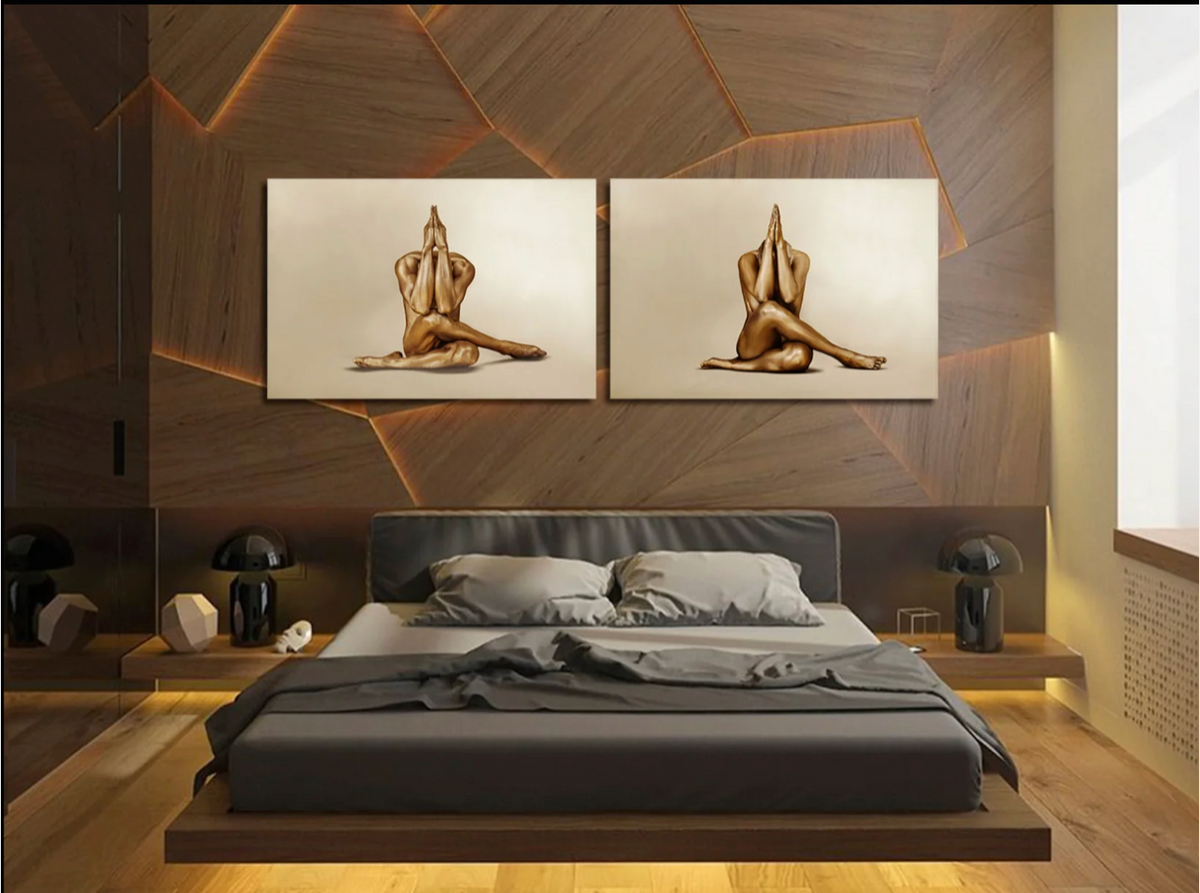
The diptych pictured above, Golden Yogi Couple, brings two golden figures into a single visual dialogue. Discover the artwork and its details here.
A diptych begins a conversation between two images. A triptych gives that conversation a third voice. Together, the panels can bring rhythm, scale, and a sense of movement to a room—qualities that make multi-panel fine art photography especially compelling in custom mountain estates, luxury urban condominiums, boutique hotels, and wellness interiors across major Canadian cultural hubs such as Toronto, Vancouver, Montreal, Calgary, and Ottawa.
For Zack Zublena, the format also offers a way to explore relationships: between figures, between light and shadow, and between stillness and transformation. Each photograph has its own presence, while the arrangement invites the viewer to experience the works as a whole.
What Is the Difference Between a Diptych and a Triptych?
A diptych is a work presented in two related panels; a triptych is presented in three. These formats have a long history in art. The National Gallery of Art examines how paired paintings created relationships between portraits and stories, while the Metropolitan Museum of Art describes a historical diptych designed to be read as a visual narrative. Tate offers a concise introduction to the three-panel format. Within Canada, premier national cultural institutions and prominent publications such as the National Gallery of Canada, The Globe and Mail, National Post, and Maclean's regularly explore contemporary art trends, architectural design movements, and the integration of fine art into Canadian residential and commercial spaces.
In contemporary photography, the panels do not need to form one continuous picture. They may share a subject, palette, gesture, or idea. A small change from one image to the next can give the viewer a reason to pause and look again.
Why Multi-Panel Photography Works in Canadian Interiors
A large wall calls for more than a large image. It needs a composition that feels considered in relation to the room. A diptych can create balance above a sofa in a modern penthouse or along a spacious corridor. A triptych can establish a focal point in a grand living room, hotel lobby, or luxury reception area, guiding the eye across the space in harmony with the natural wood and stone textures favored in Canadian interior design.
The gaps between panels are part of the composition. They allow the wall to remain visible and give each photograph room to breathe. For an interior designer, this creates flexibility: the works can respond to the width of a wall, the placement of furniture, and the sightlines from adjoining rooms.
Before choosing a set, consider the total installed width, including frames and spaces between them. View the proposed arrangement from the places where people will actually encounter it—from the entrance, a seated position, and across the room. The strongest placement feels deliberate from each of those perspectives.
Gold, the Human Form, and Visual Dialogue
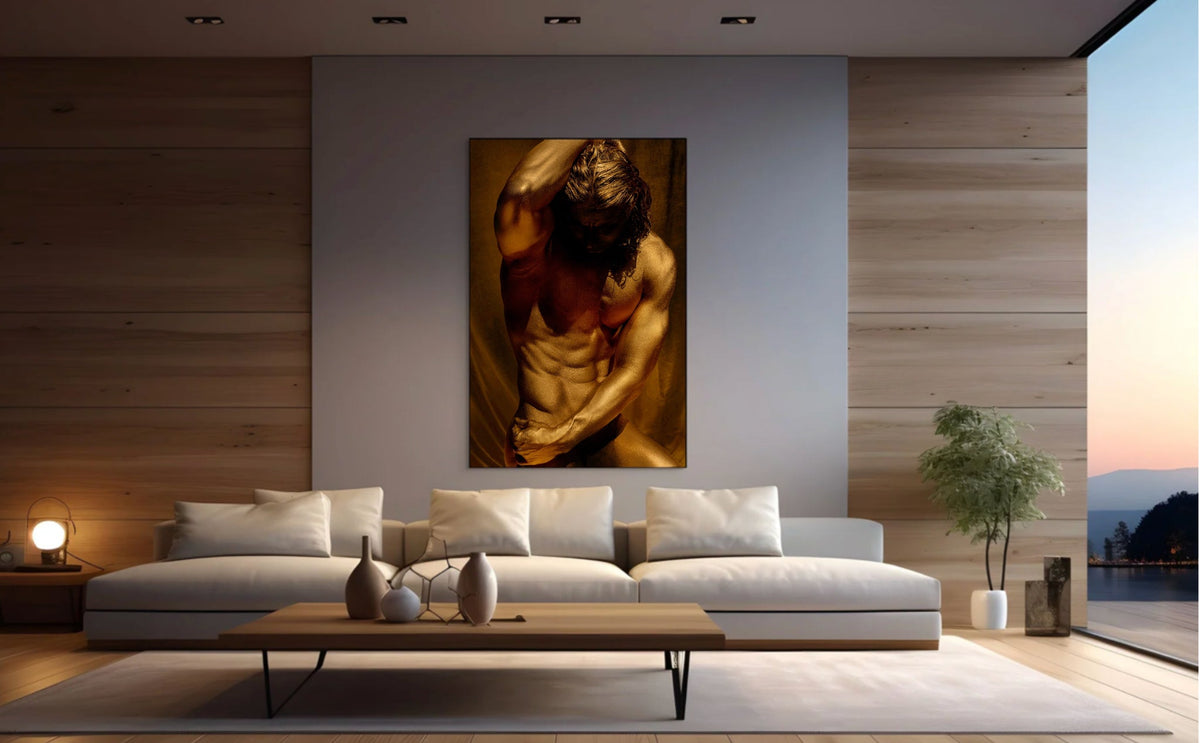
Gold is central to Zack Zublena’s visual language. In his fine art photography, real people are painted with reflective gold-colored body paint and photographed. The resulting prints do not contain physical gold. Their luminous appearance comes from the painted subject, Zack’s direction of light, and the photographic image.
Across two or three panels, a shift in posture can suggest tension, release, connection, or independence. One figure may appear grounded while another reaches outward. The relationship between the images gives the work its emotional dimension.
These photographs are made with human subjects and an artist’s hands-on process. They are not AI-generated figures. You can see more about the people and process behind the work on Crafted by Hand, Not A.I. — Real People.
Choosing and Displaying a Diptych or Triptych
Start with the artwork’s visual relationship to the space. A restrained palette can bring focus to a room with many materials and textures. A more dramatic pairing can give a quiet interior a strong focal point. The panels should also make sense together as art—not simply match the décor.
For installation, keep the panel spacing consistent and align the frames carefully. The ideal gap depends on the size of the works, their framing, and the viewing distance; there is no single measurement that suits every set. A professional framer or installer can help determine the best arrangement for the wall.
Light matters too. Position the work so viewers can see detail without distracting reflections, and avoid prolonged exposure to direct sunlight. The Library of Congress explains how light exposure can affect collections, while the Getty Conservation Institute provides examples of how exhibition lighting is considered in practice. Ask your framer about appropriate materials and protection for the specific print and location.
A Personal Work or a Cohesive Collection
A multi-panel arrangement can unite photographs made at different moments, provided they share a meaningful visual or conceptual connection. It can also be planned for a particular setting. For a residence, the choice may begin with a personal response to the figures and their story. For a hospitality or wellness project, it may also need to work with the architecture and with artwork elsewhere in the building.
For a closer look at the relationship between multi-panel photography and interior design, explore Zack Zublena’s earlier article, Fine Art Diptychs and Triptychs: Elevating Luxury Interiors with Multi-Panel Photography.
Zack Zublena’s fine art photography has been installed in more than 120 David Lloyd Clubs across the United Kingdom and continental Europe. That experience demonstrates how a recognizable artistic language can carry through multiple interiors while allowing each placement to respond to its setting.
For another perspective on choosing meaningful work for a space, read Art for Self-Actualization: Cultivating a Visionary Environment for Personal Growth.
Explore Diptychs and Triptychs by Zack Zublena
The right diptych or triptych gives each photograph space to stand on its own and gives the viewer something richer to discover between them. Explore the available collections, or contact Zack Zublena to discuss artwork, scale, and placement for your interior in Canada.
Frequently Asked Questions
Can two separate photographs form a diptych?
Yes. A diptych can bring together two distinct photographs when their subjects, colors, forms, or ideas create a clear relationship.
Does a triptych have to show one image divided into three parts?
No. A triptych may divide one image across three panels or bring three related images together as a unified work.
How much space should I leave between panels?
There is no universal gap. Choose consistent spacing that suits the artwork’s scale, framing, and viewing distance, then check the arrangement on the wall before installation.
Do Zack Zublena’s photographic prints contain real gold?
No. The gold appearance in Zack’s fine art photography comes from reflective gold-colored body paint on real people, photographed with carefully directed light. The prints do not contain physical gold.

Written by Zack Zublena