Zack Zublena Selected by Singulart: A North American Artist to Follow in Boston
Singulart has selected Zack Zublena among its curated North American Artists to Follow.
The French artist and fine art photographer brings a distinctive visual language built around gold, light, movement and the human figure.
Based in Los Angeles, Zublena works at the intersection of fine art photography, performance and contemporary sculpture. For Boston, a city of great museums, great universities and a golden dome on Beacon Hill, Singulart's selection introduces golden figures made for its brownstones, its collectors and its love of art.

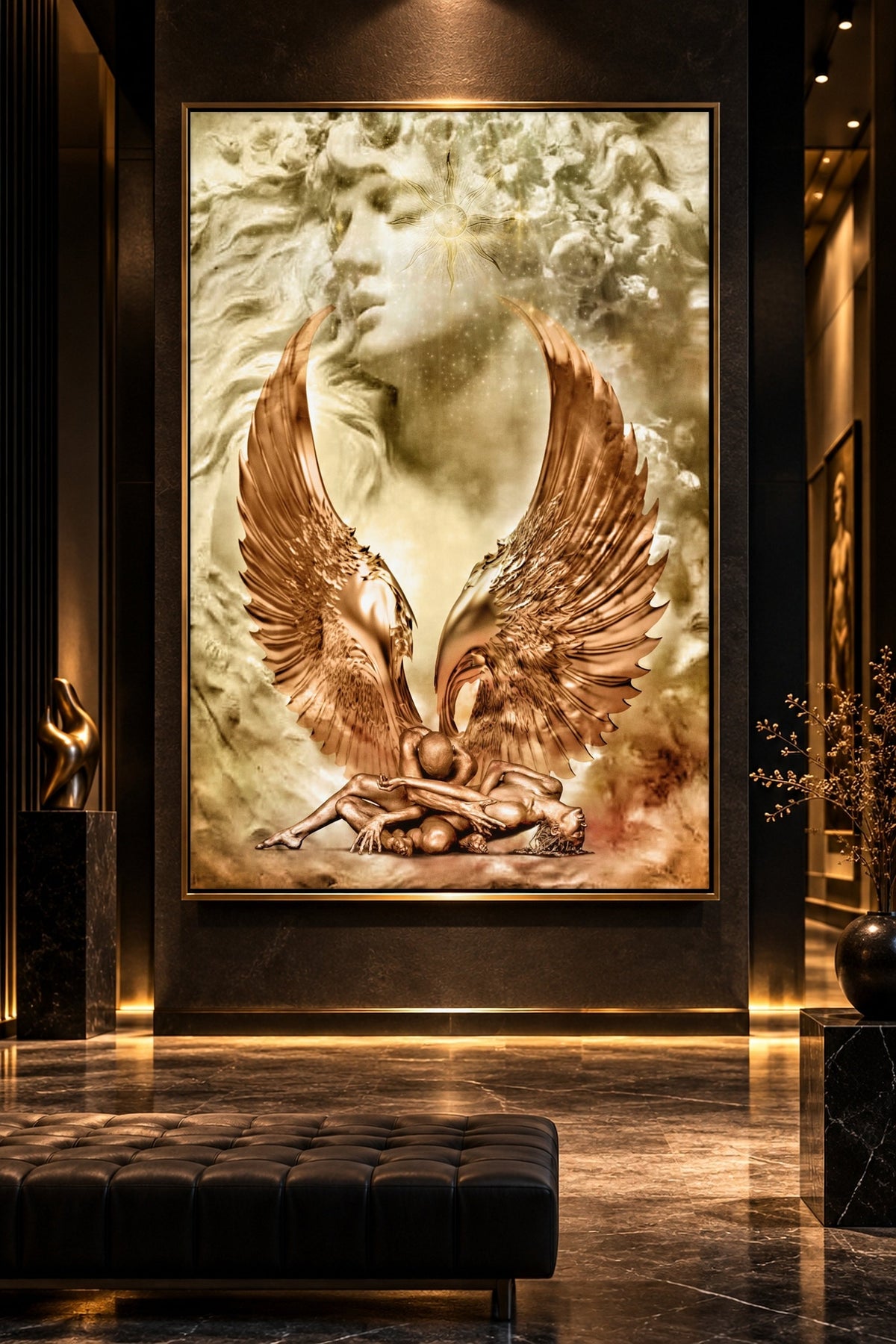
Golden Yoga Prayer explores the human body as a sculptural and contemplative form. The golden figure is transformed by light, creating an image that exists somewhere between photography, sculpture and symbolic portraiture.
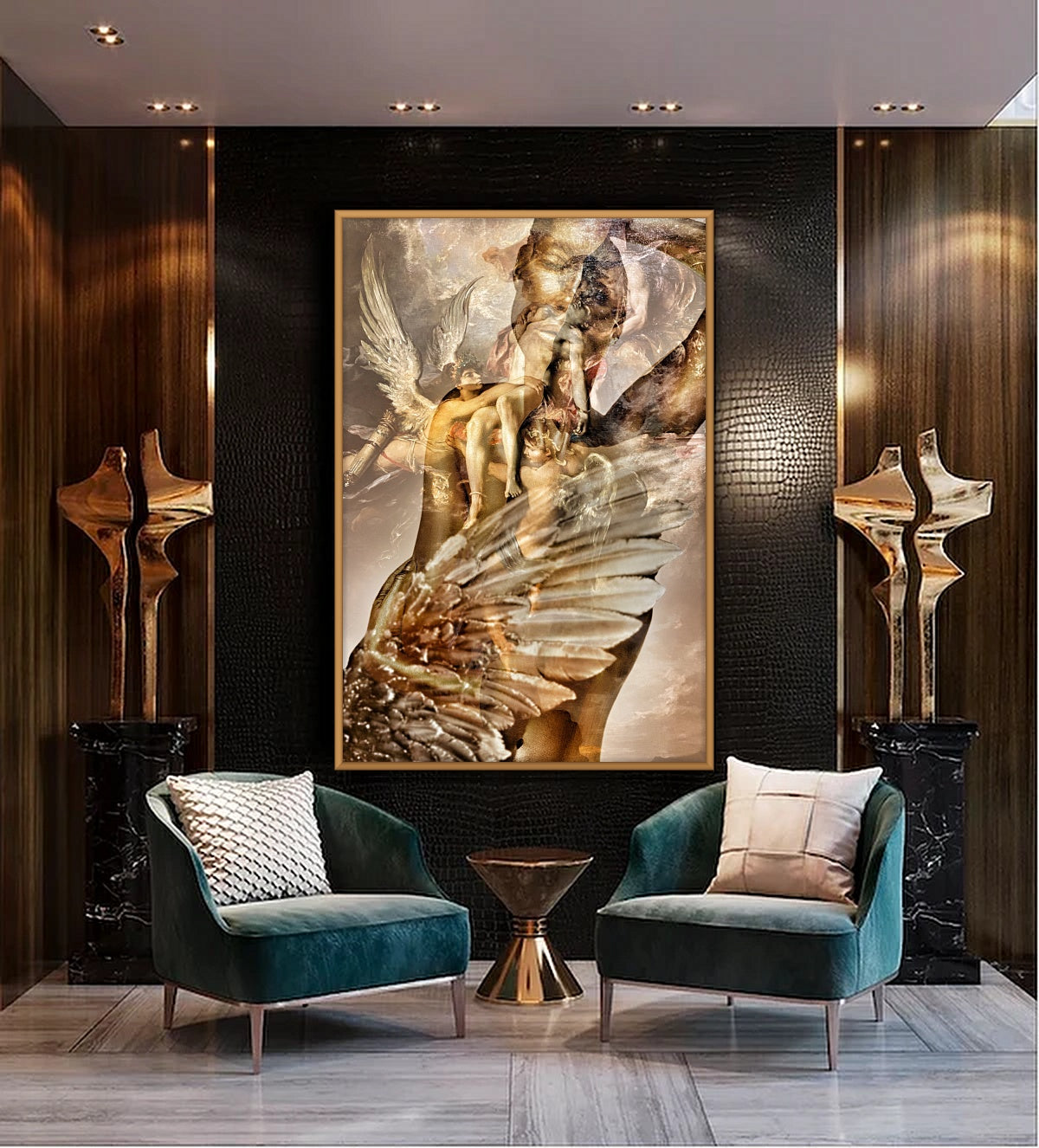
In a Boston interior, from a Back Bay brownstone to a Beacon Hill townhouse or a Seaport residence overlooking the harbor, the work becomes a point of warmth and stillness within the life of the city: an artwork, a sculptural presence and a quiet visual anchor.
Our Curation of North American Artists to Follow
Discover Zack Zublena featured by Singulart alongside selected contemporary artists from North America.
Boston: A City of Great Museums, Scholarship and Collectors
Boston is one of America's oldest and most respected centers of art, learning and visual culture. From the galleries of Newbury Street and the SoWa Art + Design District in the South End to the museums of the Fenway and the Seaport, the city brings together collectors, scholars, artists and designers with a rare depth of knowledge.
The Museum of Fine Arts, Boston, the Isabella Stewart Gardner Museum, the Institute of Contemporary Art/Boston and the Harvard Art Museums shape a cultural landscape in which photography, painting and sculpture are in constant dialogue, a dialogue followed closely by the arts pages of The Boston Globe.
Within this wider North American art landscape, Singulart's selection of Zack Zublena highlights a practice that connects photography with the physicality of sculpture and performance.
In 1924, the Museum of Fine Arts, Boston accepted a gift of photographs from Alfred Stieglitz, becoming one of the first American museums to collect photography as fine art. Today, from the ICA cantilevered over Boston Harbor to the Gardner in the Fenway and the MIT List Visual Arts Center in Cambridge, Boston offers a natural context for Zack Zublena's hybrid language of photography, performance and sculptural form.

Gold as a Visual Language
Gold is one of the defining elements of Zack Zublena's artistic vocabulary. Throughout art history, gold has been associated with light, value, power, spirituality and the timeless. In Boston, gold crowns the city itself: the gilded dome of the Massachusetts State House shines above Beacon Hill, and the gold-leaf rooms and Renaissance treasures of the Isabella Stewart Gardner Museum carry the spirit of a Venetian palazzo.
Zublena brings these associations into contemporary fine art photography by applying reflective gold directly to the human figure. Skin becomes reflective, movement becomes sculptural and the body appears to move beyond ordinary representation.
In Boston, where Atlantic light plays on the Charles River, autumn sets the Public Garden aglow and winter brings a low, golden sun to brick and brownstone, gold brings warmth into the room: it catches light, holds it and returns it as radiance, whatever the season.

From Bowing to Freedom: Performance and Sculpture
In Silent Power: The Bowing Shadow in Gold, the body becomes an instrument for expressing an idea rather than an identity.
The gesture of bowing can suggest submission, respect, introspection or surrender. Yet within Zublena's wider visual language, physical restraint can also become a metaphor for freedom. This ambiguity gives the work its power: a single gesture holds several meanings, and the viewer takes part in the interpretation.
Boston, the city where American liberty found its voice, knows this territory well. From Boston Ballet at the Citizens Opera House to the Boston Symphony Orchestra at Symphony Hall, the city has long celebrated performance and the body in movement as forms of art.

The Bow Is Mine answers the same gesture from another angle. Folded into himself, the golden male figure turns a bow into an act of ownership rather than submission: a moment of inner strength, chosen and held. Light gathers along the spine and shoulders, and the body becomes a single sculptural curve.

Golden Yoga Duo expands Zublena's exploration of the human body through the relationship between two golden figures.
The poses create a visual balance between stillness and movement. Yoga introduces a vocabulary of concentration, balance and inner movement, qualities Bostonians embrace on summer mornings along the Charles River Esplanade.

With the Golden Male & Female Diptych, the dialogue between two figures becomes a dialogue between the masculine and the feminine. Hung side by side above a brownstone fireplace or on a wall facing the harbor, the two panels answer each other: strength and grace, line and curve, two presences that are complete on their own and even stronger together.

From the Human Figure to the Cosmic
In Supernova / Genesis / Before the First Leaf, the relationship between the human figure and the cosmic becomes particularly pronounced.
The title suggests origins, expansion and the emergence of life. The golden figure can be read simultaneously as a human body and as something larger: a fragment of a celestial landscape, a symbolic form emerging from darkness.
Bostonians know this sense of scale. Beneath the dome of the Charles Hayden Planetarium at the Museum of Science, and in the research of the Center for Astrophysics | Harvard & Smithsonian in Cambridge, the human figure meets the vastness of the universe. Here, the body becomes a point of departure for imagining another state of being.

Axis of Freedom — Golden Balance extends this exploration through a triptych composition in which balance, symmetry and bodily control become central visual elements.
Presented on a long wall in a South End loft or in the lobby of a Back Bay hotel, the triptych creates a visual rhythm that changes with the viewer's position. The three photographic moments function almost like a contemporary sequence of movement frozen in space, an idea Boston knows well since Harold Edgerton first froze motion with his stroboscopic photographs at MIT.


After movement comes stillness. In Sacred Devotion, a single golden figure gathers into a pose of quiet devotion, hands joined, body still. It is the most intimate image of the series: a pilgrim at rest, holding light rather than reflecting it, and a calm, contemplative presence for a Beacon Hill bedroom, a private library or a quiet room on a snowy New England evening.
Zack Zublena: Fine Art Photography in the Boston Landscape
Boston holds a defining place in the history of photography. The city was home to F. Holland Day and the pictorialists who championed photography as art, the Museum of Fine Arts was among the first American museums to collect photographs, and at MIT, Harold Edgerton transformed how we see movement itself.
For photography collectors, the region also offers spaces dedicated to the medium, from the photography collections of the MFA and the Harvard Art Museums to the Griffin Museum of Photography in Winchester, where photographic prints are treated as collectible fine art rather than commercial imagery.
Zublena's work enters this conversation from a distinctive position. His photographs begin with the physical body, but the final image is constructed through performance, gold body paint, sculptural lighting and careful composition. Rooted in Fine Art Photography Los Angeles and created as Exclusive Art for Los Angeles Interiors, his work, now featured by Singulart, finds a natural place in Boston residences, galleries and hotels.
The Boston area is also home to the Griffin Museum of Photography and to Robert Klein Gallery, dedicated to fine art photography since 1980, reinforcing the region's long-standing relationship with collectible photographic prints.
Zack Zublena and the Boston Art Experience
In Boston, art lives everywhere: in museums and galleries, but also in hotel lobbies, private residences, restaurants in the Seaport, offices in the Financial District and homes from Brookline and Wellesley to Nantucket. An artwork can move naturally between a private collection, a boutique hotel, a wellness space and a gallery wall.
This fluidity is central to Zack Zublena's practice. His gold figures can appear monumental and intimate at the same time, making them particularly suited to Boston interiors where historic architecture meets contemporary design: from a Back Bay brownstone to a Seaport penthouse or a hotel on Newbury Street.
For Boston collectors and interior designers, the work offers another way of experiencing photography: not simply as an image on a wall, but as a luminous physical presence within a space.
Read Zack Zublena's Singulart Feature
Discover the Singulart selection and explore Zack Zublena alongside contemporary artists selected from the North American art scene.
Zack Zublena — French Artist & Fine Art Photographer · Los Angeles