In Miami, choosing art for a large wall often means negotiating a distinct visual environment: the vibrant energy of coastal light, expansive open-plan spaces, and the architectural lines of contemporary high-rises. A South Beach penthouse may offer a sweeping wall illuminated by tropical sunlight and ocean reflections. A residence in Coconut Grove may combine generous proportions with natural materials, contemporary furniture, and custom millwork.
Each setting asks a different question. Should the artwork introduce a moment of quiet gravity against the brightness outside, anchor a spacious living area, or bring a refined human presence into an open architectural room? Wall size matters, but it does not answer those questions on its own.
For Miami collectors and interior designers exploring Zack Zublena’s fine art photography, the choice may involve one vertical figure, a wide composition, or a diptych or triptych that creates a measured rhythm across the wall. The aim is to find photographs that hold your attention and belong in the way you live.
Begin with the Photograph, Not the Square Footage
Before measuring the wall, spend time with the image. Notice where your eye travels, how the figure occupies the frame, and what the surrounding darkness or open space contributes. Does the photograph feel contemplative, intimate, expansive, or resolute?
Zack Zublena is a French-American artist and fine art photographer based in Los Angeles. His gold figurative photography brings together real performers, reflective gold-colored body paint, sculptural poses, and carefully shaped light. A curve of the back, an extended arm, or a luminous silhouette can give an image its structure.
Enlarging a photograph increases its physical presence, but its composition should remain the reason for choosing it. A compelling image needs more than enough width to sit above a sofa.
Miami offers resources for developing that eye through institutions such as the Pérez Art Museum Miami (PAMM). Exploring different approaches to contemporary art can help you recognize whether you respond most strongly to gesture, atmosphere, detail, or the organization of space.
Ask yourself what draws you toward a photograph and what makes you want to keep looking. Both matter when the work will become part of everyday life. Explore the Golden Souls collection and Zack Zublena’s fine art sets, diptychs, and triptychs to begin your selection.
South Beach and the Design District: Give the Artwork Room to Breathe
In a spacious penthouse with floor-to-ceiling windows or broad walls, it can be tempting to choose the largest available format. Yet a photograph may compete with outdoor views and bright interiors if its placement is unclear.
Consider the usable wall rather than the entire room. A section between windows, a wall above a console, or the area behind a seating arrangement can define a natural place for the artwork. Structural columns, stone accents, and expansive glass should be included in that assessment.
A vertical photograph can work on a wide wall when it has a clear relationship with the furniture below it. Its concentrated shape may offer a deliberate focal point while allowing the surrounding architecture and light to remain visible.
The wall around the photograph is part of the installation. Leaving space around the frame helps separate the image from nearby objects and gives the figure’s outline room to register. Before moving to a larger size, ask whether the photograph gains presence or simply occupies more surface.
If you are exploring furniture and materials in the Miami Design District, consider how those choices will support your artwork at home. A photograph can connect with a room through texture, contrast, or form without matching every finish.
Coconut Grove: Bring a Gallery Eye to a Personal Interior
Looking at art in Miami’s galleries and cultural institutions can sharpen your awareness of spacing, framing, and the relationship between neighboring works. At home, however, the photograph also needs to share a room with furnishings, lighting, and daily movement.
Use the gallery experience as a starting point, then consider the conditions of your own interior. A work that feels balanced on an otherwise empty exhibition wall may need a different position above a sofa or beside a doorway.
The Bass in Miami Beach offers another opportunity to explore contemporary art. Looking across media can help clarify how a photographic figure might relate to modern tables, curved seating, or restrained arrangements of objects.
For an interior designer, those relationships can make the artwork feel integral to the room. For a collector, they can strengthen an existing connection to the image without reducing it to a decorative accessory.
When a Diptych or Triptych Suits a Miami Living Room
A diptych consists of two panels; a triptych consists of three. These formats can extend an installation across a wall while introducing intervals that become part of the viewing experience.
Some multi-panel works divide a continuous image. Others bring separate photographs into a deliberate relationship. In either case, the connection between the panels should be strong enough to make the arrangement feel considered.
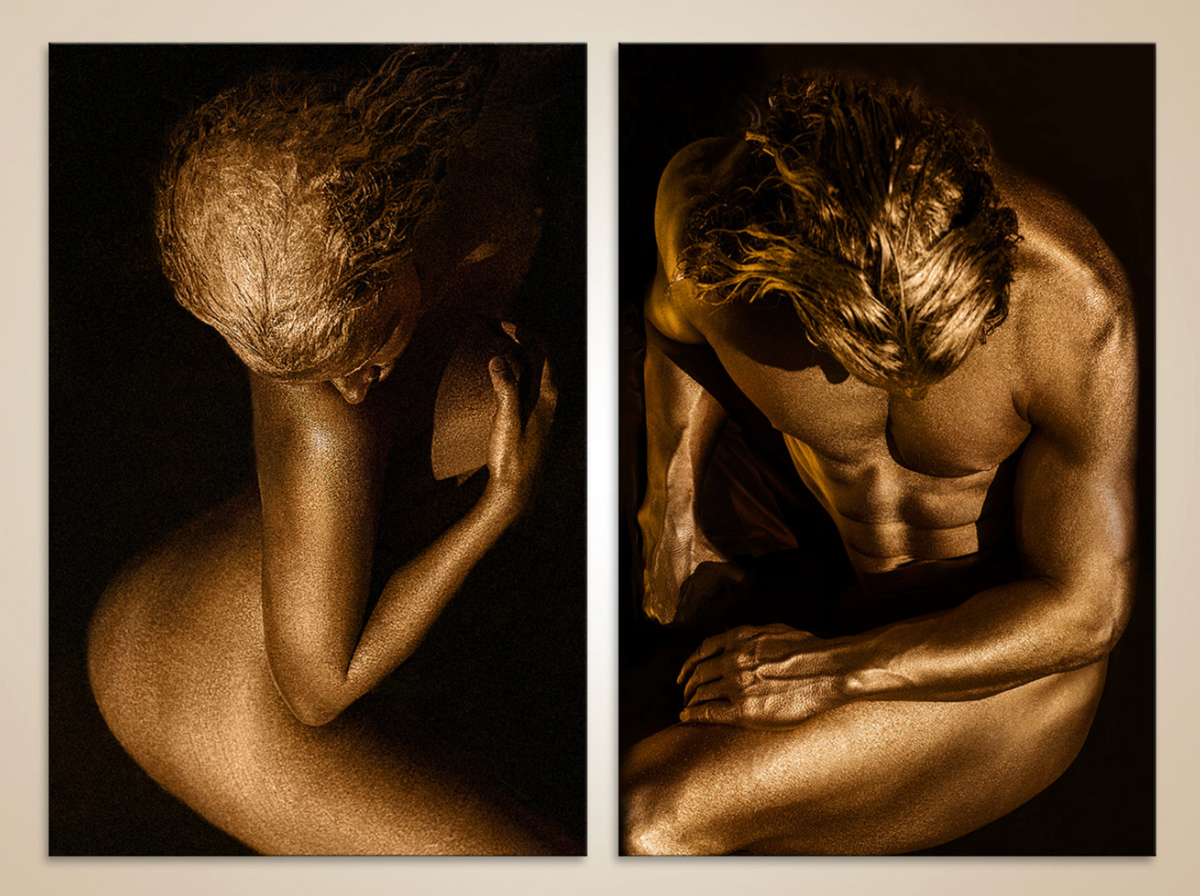
The Golden Couple Diptych illustrating this article combines two independent compositions. Their golden tones, dark backgrounds, and inward gestures create a visual connection, while each photograph retains its own structure. The eye moves between the figures and returns to the details within each image.
Above a long sofa in a South Beach residence, a diptych may create a shared center for the seating area. Along a broad dining-room wall in a Miami apartment, a triptych may establish a sequence of images. These are possibilities to test against the room’s actual dimensions and the particular works you are considering.
Calculate the installation’s total width before selecting individual panel sizes. Include the frames and the spaces between them. Those gaps affect how closely the images seem connected and how easily the eye moves across the arrangement.
For a closer introduction, read Zack’s guide to fine art diptychs, triptychs, and multi-panel photography, then explore the available fine art sets.
The Golden Couple Diptych in a Miami Bedroom

A bedroom offers a different setting from an open living area. Here, the quiet gestures of the Golden Couple Diptych can become the starting point for an arrangement that feels balanced and personal.
In a South Beach apartment or a Coconut Grove residence, compare the pair’s overall dimensions with the bed, headboard, and bedside lighting. View the proposed installation from the doorway and from the bed, where the photographs may be experienced at a different angle.
Allow the two panels enough space to retain their individual presence. A considered gap can reinforce their relationship without making the pair feel crowded.
Hands and Gesture: A Contemplative Gold Diptych

A pairing built around hands and gesture offers a more intimate approach to a large wall. It invites attention to expression and form rather than relying on a broad scene.
Consider this direction for a Coconut Grove reading area, a private study, or a quiet corner of a Miami apartment. The works can give that part of the room its own identity while remaining connected to the larger interior.
Assess the photographs from nearby seating as well as from the entrance. Their effect may depend as much on close observation as on their presence across the room. Browse the diptych and triptych collection for further combinations.
Fire and Ascent: An Expressive Pairing for a Miami Living Room

For a more energetic focal point, consider a pairing such as Skyfall Flames VI and Phoenix Ascent. Fire imagery introduces a different visual language from the quieter gold figurative works, offering a starting point for an interior organized around movement and intensity.
In a Brickell living area or a contemporary Miami Beach residence, assess how that energy relates to the room’s furniture and views. A visually active pair may benefit from a clear surrounding wall and a restrained arrangement of objects below it.
Choose the imagery because it speaks to you, then use placement, framing, and lighting to support it. Discover more possibilities in Zack Zublena’s coordinated fine art sets.
A Gold Yoga Triptych for a Miami Movement Space

A triptych introduces three panels and two intervals. When the images share a language of movement, their arrangement can make the relationship between poses part of the room’s visual rhythm.
For a dedicated practice room in a Miami home or a local yoga studio, consider the installation from standing height and floor level. Mirrors, equipment, and the wall area needed for movement should all inform the placement.
If the practice space shares a room with another activity, choose a format that remains comfortable within both uses. Explore the available yoga and wellness art sets before deciding on dimensions and spacing.
Sculptural Torso Photography for a Miami Bedroom

Torso photography brings attention to contour, form, and the way light describes the body. Presented as a diptych, it creates a relationship between two photographs without requiring a full-length figure.
For a Miami bedroom with restrained furnishings, this approach could establish a substantial visual focus. Compare the framed arrangement with the headboard, lamps, and architectural lines, allowing enough space for each element to remain clear.
Explore additional figurative combinations in the fine art sets collection, and choose the images for their character as well as their relationship with the room.
Golden Lips and Floral Imagery for an Intimate Interior

A pairing of golden lips and floral imagery offers another approach to figurative detail. It can introduce an intimate mood in a dressing area, bedroom, or seating space where the photographs are appreciated at closer range.
In a Miami Beach apartment or a Coconut Grove home, consider whether the pair should become the room’s central focus or define a smaller personal area. A few carefully selected objects may provide enough context without competing with the photographs.
Find further ideas in the collection of fine art diptychs, triptychs, and coordinated sets.
A Gold, Fire, and Desert Triptych for a Miami Dining Room

A dining-room wall offers an opportunity to bring three distinct images into a shared composition. A combination of gold figurative, fire dancer, and desert imagery can create a sequence that encourages the eye to move between different subjects.
For an open-plan Brickell apartment or a spacious Miami residence, compare the triptych’s total width with the dining table and any sideboard below it. Consider its relationship with pendant lighting, which may overlap the view from certain positions.
Check the arrangement while seated at the table and from the adjoining living area. The photographs should remain readable as individual works while forming a coherent group across the wall.
Browse Zack Zublena’s diptychs, triptychs, and fine art sets to explore combinations suited to your dining space.
The interior images in this article illustrate presentation possibilities; they are not identified as installations in Miami. Use them as inspiration, then plan around your own architecture, furnishings, and available wall space.
Measure Around Miami’s Architectural Details
A large wall is rarely an entirely empty rectangle. Recessed lighting, built-in sound systems, vents, floor-to-ceiling windows, and sliding glass panels can all influence the space available for a framed photograph.
Measure the usable area and confirm whether the artwork’s listed dimensions refer to the print or the finished framed piece. A mat and frame can substantially change the outer dimensions.
Make a temporary paper template using a method suitable for the wall surface. View it from the entrance, the main seating position, and any adjoining room. For a diptych or triptych, reproduce every panel and the intended gaps.
In a high-rise building with elevator access restrictions or security protocols, also check how a large framed work would reach its final location. Confirm access and installation requirements before committing to the finished presentation.
Consider Both the First View and the Close View
In an expansive open-plan penthouse, a photograph may first be encountered from across the room, alongside panoramic views. A clear silhouette or a strong relationship between light and shadow can make the composition readable at that distance.
In a more intimate study or bedroom, the same work may be seen primarily from a nearby chair or from the bed. Subtle tonal changes and details of gesture can become more important to the experience.
Consider both encounters. The first view may establish the photograph’s presence; closer viewing should offer reasons to remain with it.
Coverage in regional publications such as the Miami Herald’s visual arts section offers another starting point for exploring artists and exhibitions. Looking closely at varied works can help distinguish immediate visual force from quieter forms of observation.
Let Gold Connect with the Room’s Materials
Golden tones can create a warm relationship with coral stone, travertine, teak, brass, or polished concrete. Against cool white plaster or deep charcoal accents, a luminous figure can introduce a distinct point of contrast.
In a Miami interior with clean geometric lines, the photograph’s organic human curves may soften a structured setting. In a residence with traditional or transitional coastal details, a restrained frame may help a contemporary image sit comfortably within the architecture.
These connections do not require matching gold accessories throughout the room. Look instead at the balance of warm and cool colors, the repetition of a curve, and the relationship between the photograph’s dark background and the surrounding wall.
The golden appearance is captured in the photograph. It does not, by itself, mean that physical gold has been applied to the print. The finished work’s appearance will depend on the printing surface, glazing, and illumination.
Choose for the image’s gesture and emotional character as well as its palette. A work that only matches the room’s accents may offer less to return to once that first harmony has been noticed.
Miami Windows: Check Daylight and Glare
Floor-to-ceiling windows can bring generous light into an interior while complicating the placement of a framed photograph. Review the proposed wall during the day and after dark. Reflections from sunlight, pale floors, or ceiling fixtures may obscure parts of the image.
A photograph with deep shadows should retain visible detail without losing the contrast that gives the composition its structure. Test the viewing angle from the places where you will actually spend time.
Avoid prolonged direct sunlight and discuss the specific print materials with an experienced framer. Ask about glazing options for managing reflections and UV exposure, while treating placement away from direct sunlight as a separate consideration.
Consider the room’s environment too. Humidity, nearby air-conditioning outlets, and exposure through frequently opened windows or doors deserve attention. Appropriate care depends on the particular print and its presentation.
Frame for the Photograph and the Architecture
A frame changes the boundary between the image and the room. A restrained profile may keep attention on the photograph; a more pronounced frame can create a stronger architectural outline.
Compare visible width, depth, finish, matting, and glazing. A slim black frame may reinforce a dark composition, while a light wood frame may create a connection with natural flooring or stone. The most convincing choice supports the image as well as the interior.
For multi-panel installations, consistent framing and careful alignment help the photographs read together. Confirm the finished dimensions, total weight, and appropriate hanging method before installation.
If you live in a managed high-rise building with specific delivery and installation guidelines, check the building requirements before arranging the work. A professional installer can assess the wall construction and suitable hardware for substantial framed pieces.
Build Your Eye Through Miami’s Art Scene
Choosing a photograph becomes easier when you understand what repeatedly attracts your attention. Exploring exhibitions and cultural commentary in publications such as Miami New Times offers a way to engage with local creative discussions. These encounters can prompt useful questions about framing, perspective, and the atmosphere an image creates.
Museums, galleries, and publications are independent resources for developing your preferences. Your own connection to the photographs should remain central to the final choice.
Claim 20% Off When Purchasing Two or More Different Artworks
Ready to bring your selection together? Enjoy 20% off when purchasing two or more different artworks with code SET20.
Explore Zack Zublena’s fine art sets, diptychs, and triptychs, choose the different artworks you would like to purchase, and enter SET20 at checkout to claim your discount.
Whether you are considering a contemplative pair for a bedroom, an expressive diptych for a living room, or a triptych for a dining or movement space, choose the photographs and dimensions that suit your interior.
Find Fine Art Photography for Your Large Wall in Miami
A successful installation brings together images you care about, a format suited to the architecture, and thoughtful lighting and framing. Whether your home is in South Beach, Brickell, Coconut Grove, or another part of Miami, begin with the photographs and let the room help determine their presentation.
Explore the Golden Couple Diptych, browse the Golden Souls collection, or discover more combinations in the fine art sets collection.
To discuss works for your Miami interior, contact Zack Zublena with your wall measurements, a photograph of the room, and the artworks that interest you. When you are ready to purchase two or more different artworks, remember to enter SET20 at checkout for 20% off.
For more inspiration on choosing fine art for your Miami interior, explore Art by City: Miami — Zack Zublena, with guides for collectors, homeowners, and interior designers.