Art Sets for Sale: How to Curate a Cohesive Fine Art Collection
The Principles of a Cohesive Fine Art Collection
A thoughtfully selected group of artworks does more than decorate a room. It establishes a mood, creates a visual dialogue and transforms an interior into a personal gallery. Although a single statement piece can define an area, a curated collection of fine art photography provides an opportunity to develop a narrative across several works.
The goal is to achieve harmony while allowing every piece to retain its individual presence. The works should contribute to a greater whole, creating an experience that feels sophisticated, intentional and personally meaningful. For additional guidance before beginning a collection, read The Collector’s Guide to Buying Fine Art Prints Online.
This approach differs from an eclectic gallery wall containing unrelated artists, periods and visual traditions. In a cohesive art set, the photographs are connected through a shared palette, theme, atmosphere or artistic vision. They exist in conversation with one another, guiding the eye through the room and encouraging contemplation.
The physical characteristics of photographic prints also contribute to their presence. MoMA’s research into the materials and construction of photographic prints demonstrates how paper, surface, image material and finishing practices all form part of the photographic object. This material dimension helps distinguish a considered fine art presentation from ordinary wall covering.
Establishing a Visual Theme
The foundation of a cohesive art set is a unifying visual thread. This common element can take many forms, providing creative freedom while preserving a sense of order.
One approach is to select works sharing a dominant color palette. A series featuring warm, luminous tones can introduce serenity and light, while a collection built around deep shadows and dramatic contrast can establish a more mysterious, introspective atmosphere.
Another effective strategy is to choose pieces with related subject matter or compositional structures. A set of figurative photographs, abstract forms or nature-inspired images creates an immediate sense of connection. Similarly, artworks sharing a consistent treatment of light, gesture, texture or perspective will naturally feel related.
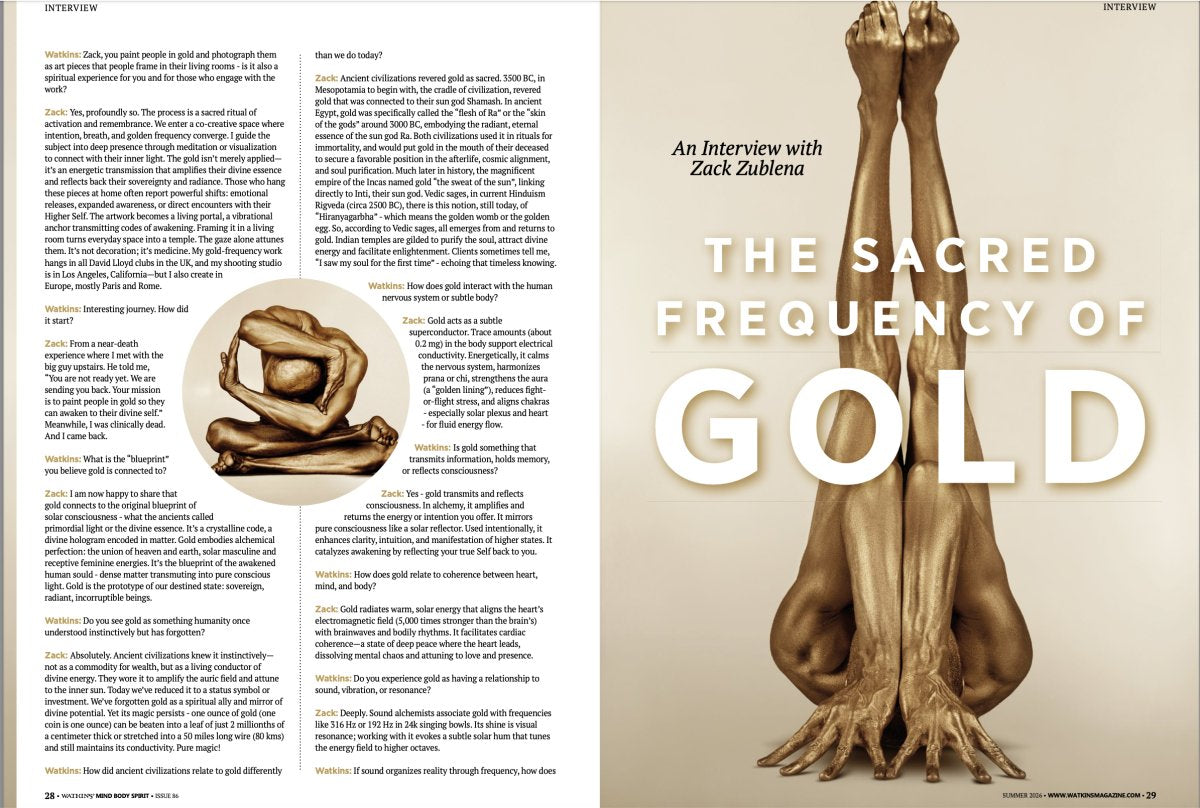
Zack Zublena’s Divine Masculine & Feminine Wall Art Collection offers an example of this principle. Its works are connected by their exploration of sacred polarity, human connection, sculptural form and complementary energies. The collection provides a strong foundation for creating a unified display with both visual and symbolic continuity.
To understand how color and form influence an interior’s identity, explore Colorful Boutique Hotel Artwork: A Curator’s Guide.
The Impact of Scale and Arrangement
Once you have selected the artworks, their physical arrangement becomes essential to their collective impact. Before hanging anything, consider the architecture of the room, including wall dimensions, ceiling height, furniture placement and primary sightlines.
A large open wall can accommodate a grid of several medium-sized pieces or a single oversized photograph accompanied by smaller works. A narrow corridor or intimate alcove may be better suited to a vertical arrangement of two or three smaller prints.
Symmetrical arrangements, such as a precise grid or horizontal line of identically sized frames, create formality, balance and order. This classic approach works particularly well in dining rooms, entryways, luxury hospitality interiors and professional settings.
For a more organic effect, consider an asymmetrical or salon-style arrangement. This approach groups works of different sizes and orientations while balancing their collective visual weight. Whatever format you select, adequate space between the frames is essential. Proper spacing prevents visual clutter and allows each artwork to be appreciated individually.
Large-scale artwork can also function as an architectural element. Zack Zublena’s installation at The Cellar Beverly Hills illustrates how oversized fine art photography can define an interior and reinforce its visual identity. Explore the project in Zack Zublena Fine Art Photography at The Cellar Beverly Hills.
A Practical Guide to Selecting and Combining Artworks
When considering art sets for sale or assembling your own grouping, begin by defining the purpose and atmosphere of the space. Are you designing a tranquil retreat for rest and reflection, a vibrant social environment for entertaining guests or a focused professional interior intended to inspire?
The atmosphere you wish to cultivate should guide your selections. This helps you choose pieces that complement the décor while supporting the room’s emotional and practical purpose.
Fine art photography is particularly versatile when building a collection because it can combine precise visual detail with atmosphere, symbolism and emotional depth. Whether abstract or figurative, a photographic print can introduce texture, perspective and a distinctive artistic vision into an interior.
Collectors should also examine whether a photograph is offered as part of a defined edition. The Museum of Modern Art’s explanation of an edition provides useful context for understanding this established fine art practice. For more detailed purchasing considerations, read Limited Edition Spiritual Prints for Luxury Interiors.
Always consult the individual product page for confirmed information about available dimensions, formats, print materials and edition status.
Curating from a Single Collection
Drawing several artworks from one established collection is the most direct route to visual harmony. Artists generally develop collections around a central theme or aesthetic, establishing a consistent relationship between color, tone, subject and composition.
The Divine Masculine & Feminine Wall Art Collection explores the relationship between complementary forces through figurative photography, symbolic gesture and sculptural composition. Selecting multiple works from this collection can create a cohesive narrative centered on polarity, union, balance and human connection.
For interiors requiring a more dramatic atmosphere, the Dark Elegance Collection uses deeper tones and pronounced contrasts between light and shadow. Its contemplative visual language can create a sophisticated and mysterious environment.
By selecting several works from one of these collections, you can establish a display that feels coherent without becoming repetitive. Different poses, orientations and compositions provide variety while preserving the collection’s shared artistic identity.
Mixing Artworks from Different Collections
Combining photographs from different collections offers an opportunity to create a more layered and personal narrative, but it requires a discerning eye. The key is to identify at least one element connecting the selected works.
This visual bridge might be a recurring accent color, similar proportions, a complementary emotional tone or a consistent treatment of the human form. Related framing can also help unite works from different series.
For example, a figurative piece from the Holy Collection could be paired with a photograph from Divine Masculine & Feminine that shares its graceful composition, symbolic language or treatment of light. The goal is to allow the works to enhance one another rather than compete for attention.
You can explore Zack Zublena’s available collections to compare their visual languages and identify potential pairings.
Finalizing Your Curation: Framing, Lighting and Placement
The final presentation can elevate a group of artworks into a refined installation. Thoughtful framing, controlled lighting and careful placement help protect the collection while presenting it to its full visual potential.
The Role of Framing
Frames protect and support the artwork while integrating it into the interior. The National Gallery of Art’s preventive-conservation guidance explains that frames play both aesthetic and protective roles and should complement the work without overpowering it.
Not every frame in a set must be identical, but they should be coordinated through style, color or material. For a clean contemporary presentation, consider simple gallery frames in black, white or natural wood. This minimalist approach keeps attention on the photographs.
For a traditional or eclectic interior, more decorative frames may be appropriate, but maintaining a consistent finish will help preserve unity across the group. A cohesive framing strategy allows the eye to perceive the photographs as a deliberate collection.
Illuminating Your Collection
Lighting is one of the most important considerations when displaying photography. Appropriate illumination reveals color, tonal detail and texture, while excessive exposure can contribute to deterioration.
El departamento de conservación de fotografías de la Galería Nacional de Arte recomienda proteger los materiales fotográficos de la luz, el calor y la humedad excesivos. Las pautas de duración de la luz del Smithsonian también demuestran por qué las obras fotográficas requieren una iluminación cuidadosa.
Evite colocar impresiones artísticas en exposición directa prolongada luz del sol. Antes de elegir una ubicación, observe cómo la luz natural se mueve por la habitación a lo largo del día.
Evite colocar impresiones artísticas bajo la luz solar directa y prolongada. Antes de elegir una ubicación, observa cómo la luz natural se mueve por la habitación a lo largo del día.
Para la iluminación artificial, la iluminación en riel ajustable puede dirigir haces controlados hacia obras individuales. Las luces de los cuadros montadas sobre los marcos crean un efecto clásico e íntimo, mientras que la iluminación ambiental cuidadosamente colocada puede producir una cálida atmósfera nocturna.
Una nota sobre la visión del artista
En última instancia, curar una colección de bellas artes se trata de conectarse con la visión de un artista y hacer que esa visión forme parte de la vida diaria. La fotografía artística de Zack Zublena ha sido seleccionada para sofisticados interiores privados y profesionales, incluidas instalaciones en más de 120 clubes David Lloyd en todo el Reino Unido y Europa continental.
Este extenso proyecto demuestra cómo un conjunto de trabajo coherente puede ayudar a establecer una atmósfera y una identidad visual en numerosos entornos de bienestar y fitness. Obtenga más información en Cómo la fotografía artística de Zack Zublena se convirtió en parte de 120 interiores de clubes de lujo.
Para Para aquellos que buscan crear una pieza central especialmente personal, Zack también ofrece la Golden Ascension Experience, un proceso artístico colaborativo a través del cual el participante se convierte en el sujeto de una elegante fotografía figurativa de bellas artes.
Durante esta experiencia, la pintura corporal reflectante de color dorado y la iluminación cuidadosamente controlada le dan a la figura fotografiada su aspecto luminoso y luminoso. aspecto escultórico. Las impresiones fotográficas resultantes no contienen oro físico ni pan de oro.
Ya sea seleccionando de una colección existente o encargando una obra de arte personal, construir una colección es un viaje gratificante. Las obras que elijas se convierten en parte de la atmósfera, la identidad y la narrativa emocional de tu espacio.
Para discutir tu proyecto o recibir información sobre obras de arte disponibles, contacta a Zack Zublena.