Fine Art Diptychs and Triptychs: Elevating Luxury Interiors in Singapore
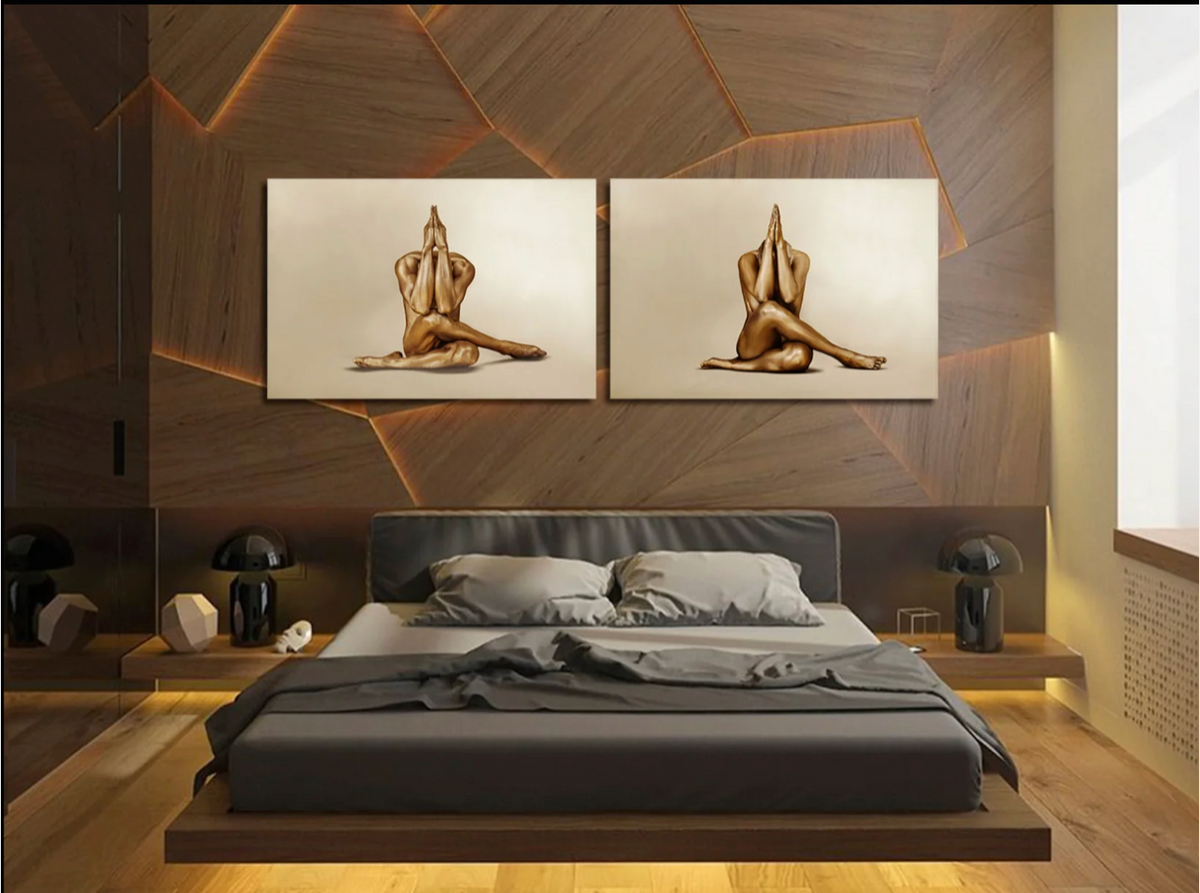
The diptych pictured above, Golden Yogi Couple, brings two golden figures into a single visual dialogue. Discover the artwork and its details here.
A diptych begins a conversation between two images, while a triptych gives that conversation a third voice and a deeper resonance. Together, these panels introduce rhythm, scale, and fluid movement to grand spaces—qualities that make multi-panel fine art photography an exceptional choice for luxury condominiums along Orchard Road, landed properties in Bukit Timah, penthouse suites at Marina Bay, and high-end hospitality sanctuaries across Singapore.
For artist Zack Zublena, this format provides a powerful medium to explore profound relationships: between human figures, between light and shadow, and between stillness and transformation. Each photograph retains an individual presence, while the cohesive arrangement invites the viewer to experience the works as a unified visual narrative.
What Is the Difference Between a Diptych and a Triptych?
A diptych is a work presented in two related panels; a triptych is presented in three. These formats possess a rich history in visual arts, celebrated in studies by global institutions such as the National Gallery of Art and the Metropolitan Museum of Art, which demonstrate how paired paintings established narrative dialogue, while Tate offers a concise introduction to the three-panel system. Within Singapore's dynamic cultural and architectural landscape, premier national institutions, museums, and leading media platforms such as the National Heritage Board, Esplanade – Theatres on the Bay, The Straits Times, CNA, and The Business Times consistently spotlight the evolving intersection of contemporary art, tropical modern architecture, and luxury interior design.
In contemporary photography, panels do not need to form a single continuous picture. They may share a subject, a refined palette, a dynamic gesture, or a conceptual thread that gives the viewer a reason to pause and reflect.
Why Multi-Panel Photography Works in Singaporean Luxury Interiors
Expansive walls in modern landed homes or high-rise luxury apartments require more than a single large image; they call for a composed arrangement that harmonizes with architectural scale. A diptych can create exquisite balance above a designer sofa in a formal living room or along an architectural hallway, whereas a triptych establishes a striking focal point in vast open-plan reception areas, private penthouses, and elite hotel lobbies in downtown Singapore—complemented by the interior standards championed by regional publications like Architectural Digest Middle East.
The intervening gaps between panels are an integral component of the composition. They allow the wall surface to remain visible, granting each photograph space to breathe. For interior designers and homeowners in Singapore navigating tropical architectural layouts and expansive glass facades, this format offers remarkable flexibility to complement diverse wall widths and sophisticated lighting schemes.
Before selecting a multi-panel set, evaluate the total installed width, inclusive of framing and negative space. View the proposed configuration from natural vantage points throughout the room—from the entryway, seating areas, and adjacent spaces—to ensure the arrangement feels intentional and balanced.
Gold, the Human Form, and Visual Dialogue
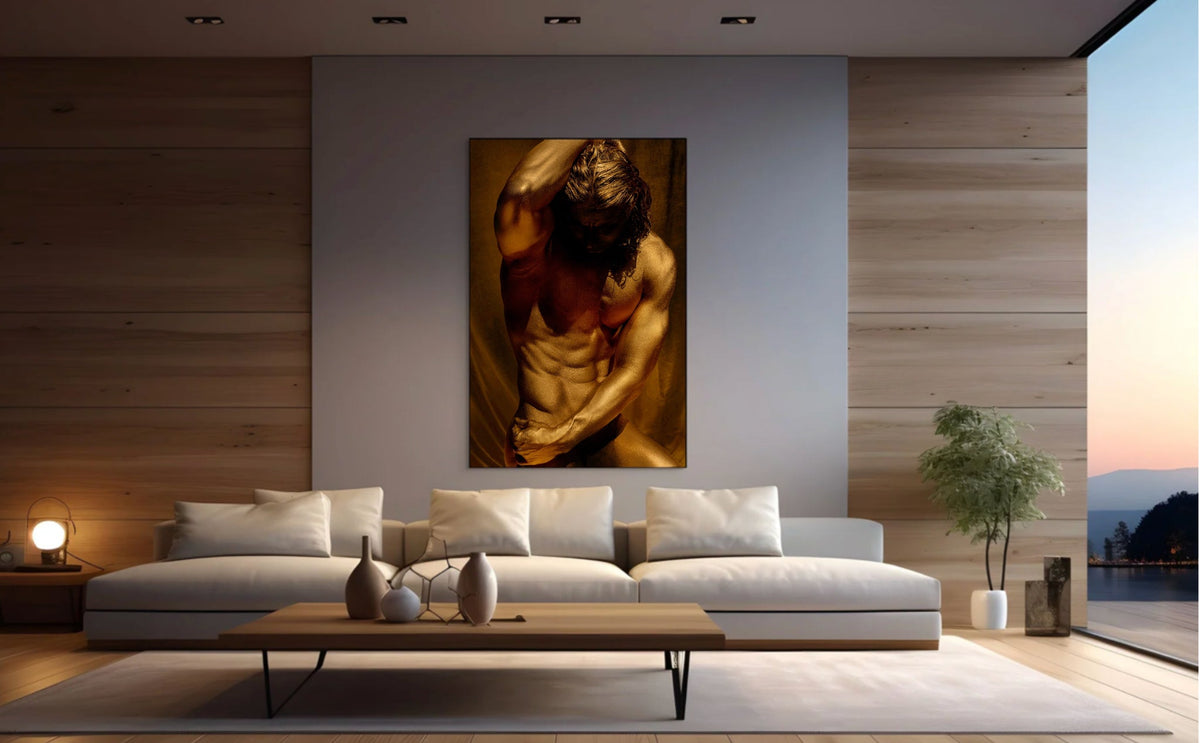
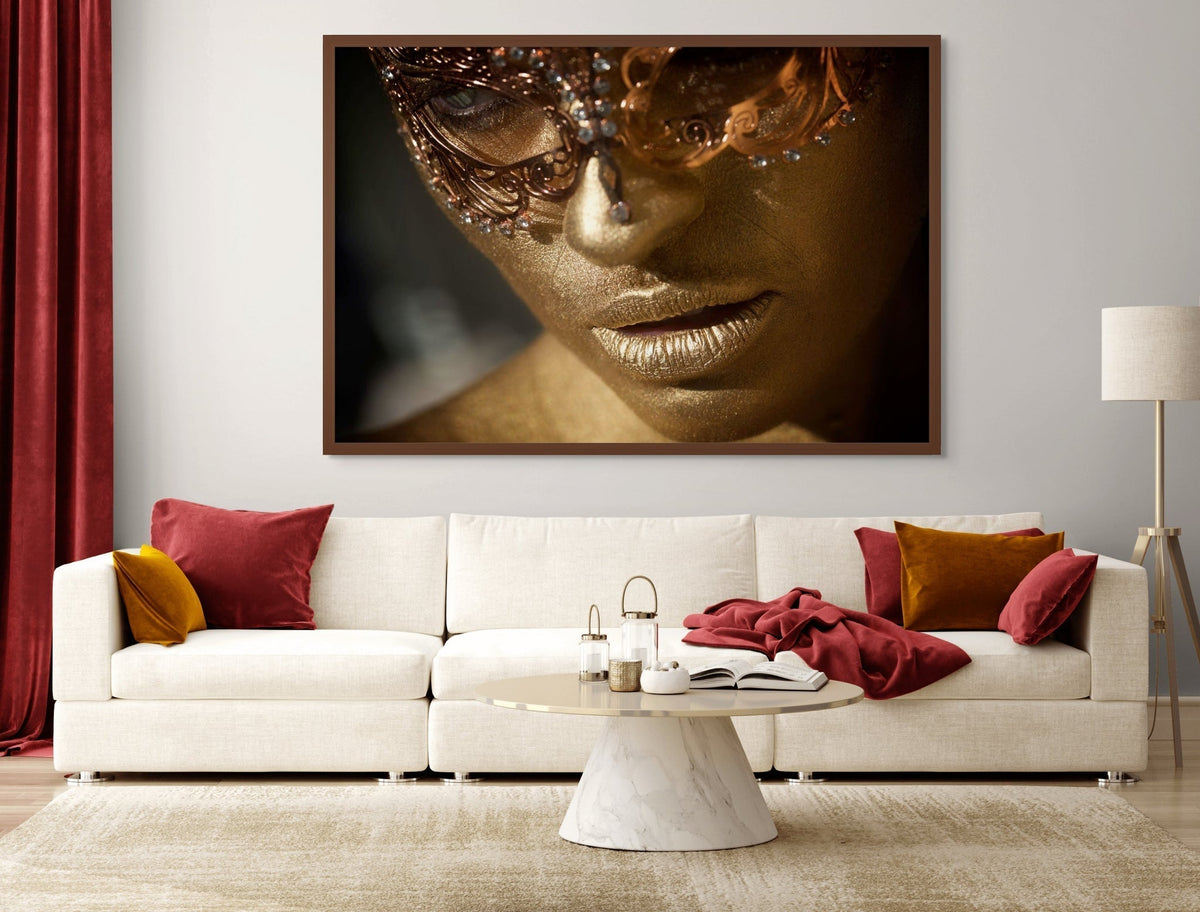
Gold is fundamental to Zack Zublena’s visual language. In his striking fine art photography, real people are painted with reflective gold-colored body paint and captured under meticulously directed light. The prints do not contain physical gold leaf; instead, their luminous intensity emanates from the living subject, masterful lighting, and photographic craft.
Across two or three panels, subtle shifts in posture can express tension, release, connection, or autonomy. One figure may appear grounded and contemplative while another reaches outward. This interplay endows the artwork with profound psychological and aesthetic depth.
These pieces are created with human subjects through a dedicated, hands-on artistic process rather than AI generation. You can discover more about the subjects and methodology behind these works on Crafted by Hand, Not A.I. — Real People.
Choosing and Displaying a Diptych or Triptych
Begin by analyzing the artwork's visual dialogue with the surrounding space. A restrained, harmonious palette introduces calm focus into richly textured interiors, while a more dramatic pairing establishes a powerful focal point within minimalist rooms. The panels must resonate as cohesive art rather than mere interior matching.
When installing, maintain consistent spacing and precise frame alignment. Refer to professional preservation guidelines from the Library of Congress and the Getty Conservation Institute regarding lighting management to protect fine art prints from direct, prolonged sunlight exposure in bright tropical climates.
A Personal Work or a Cohesive Collection
A multi-panel arrangement can unite photographs captured at different times, provided they share a meaningful conceptual or aesthetic bond. For private residences, selection often starts with an emotional connection to the figures and their narrative. For high-end commercial hospitality projects, the layout must integrate seamlessly with overarching architectural and interior design visions.
For deeper insight into the synergy between multi-panel photography and upscale design, explore Zack Zublena’s article, Fine Art Diptychs and Triptychs: Elevating Luxury Interiors with Multi-Panel Photography.
Zack Zublena’s fine art photography has been permanently installed across more than 120 David Lloyd Clubs locations in the United Kingdom and continental Europe, proving how a distinct artistic voice adapts effortlessly to diverse architectural environments.
For additional perspective on curating meaningful art for your living space, read Art for Self-Actualization: Cultivating a Visionary Environment for Personal Growth.
Explore Diptychs and Triptychs by Zack Zublena in Singapore
A thoughtfully selected diptych or triptych grants each photograph room to shine while offering viewers rich visual layers to discover. Browse the available collections or contact Zack Zublena directly to discuss artwork dimensions, scale, and placement for your interior project in Singapore.
Frequently Asked Questions
Can two separate photographs form a diptych?
Yes. A diptych can bring together two distinct photographs when their subjects, colors, forms, or underlying concepts establish a clear visual relationship.
Does a triptych have to show one image divided into three parts?
No. A triptych may divide a single image across three panels or bring three related images together as a unified artistic work.
How much space should I leave between panels?
There is no universal gap measurement. Choose consistent spacing that complements the scale, framing, and viewing distance of your space, then verify the arrangement on the wall before final installation.
Do Zack Zublena’s photographic prints contain real gold?
No. The golden luminosity in Zack’s fine art photography is created by applying reflective gold-colored body paint to real people under precise studio lighting. The prints themselves do not contain physical gold.

Written by Zack Zublena