Article: Fine Art Photography and Gilding: How Gold Inspires Contemporary Artists in the UK
Fine Art Photography and Gilding: How Gold Inspires Contemporary Artists in the UK

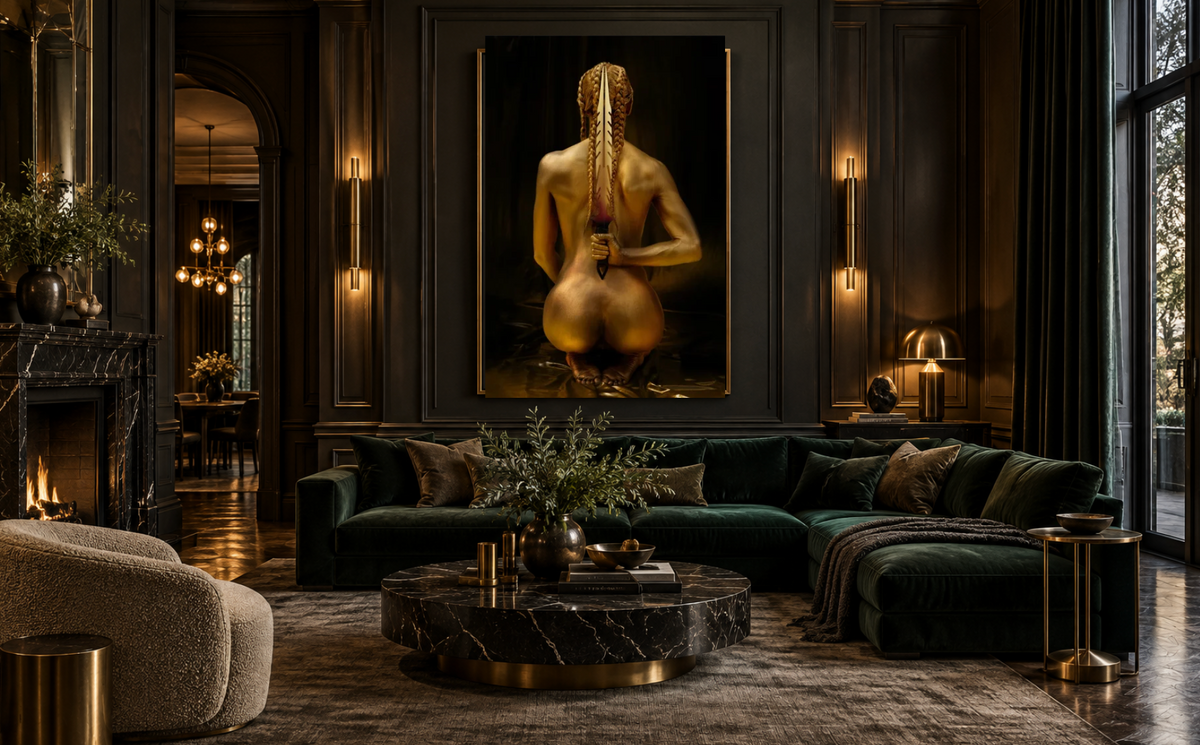
Hidden Horus by Zack Zublena, shown in a contemporary British interior visualization exploring gold, sculptural form, and light. Discover Hidden Horus and available formats.
Gold possesses a remarkable capacity to transform how we experience a surface. It catches the ambient light, accentuates a subtle physical contour, and imparts an object with a distinct presence distinct from its underlying material. British cultural institutions, such as the British Museum, preserve magnificent historical collections that reflect our nation's enduring fascination with this precious metal across millennia, from ancient pharaonic artifacts to masterpieces of British gold smithing.
For French-American photographer Zack Zublena, that rich historical lineage offers a profound catalyst for artistic reflection. His golden figures explore the intricate relationship between the human body, ambient light, and physical transformation. His work belongs to a sophisticated contemporary photographic tradition while actively engaging with the enduring cultural fascination of gold.
Understanding the historical tradition of gilding brings that artistic conversation into sharper focus for British collectors: how gold was historically applied, what it signified, and how a contemporary fine artist can respond to its heritage within sophisticated residences across London, Edinburgh, Manchester, and Bath.
What Is Gilding in Art and Design?
Gilding refers to the craft of applying a thin layer of gold to an underlying support material. A gilded object may feature a wooden, stone, or metallic base beneath its luminous golden surface. Its brilliant exterior does not imply that the entire object is cast from solid gold.
The exceptional malleability of gold makes this technique achievable: it can be beaten into ultra-thin sheets and leaf. The Victoria and Albert Museum (V&A) in London provides extensive educational resources exploring these intricate material properties and historical workshop practices within its materials and techniques collections guide.
This material distinction remains essential when evaluating fine art and antiques. A solid gold ornament, a surface covered in foil, and a gilded sculptural figure represent completely distinct artistic choices and craftsmanship methods.
How Historical Artisans Worked with Gold
Historical goldworking involved diverse techniques rather than a single standardized procedure. Artisans hammered, shaped, joined, and decorated gold, selecting specific workflows tailored to the exact character of the object being created.
Curatorial essays published by institutions like the National Portrait Gallery often examine how portraiture, surface treatment, and material choices intersect across centuries of British and European art history. Surviving museum artifacts demonstrate how a golden layer was frequently integrated with diverse foundational supports.
When studying gilding, the base material and its preparation are paramount. A carved oak panel and a bronze casting required vastly different workshop processes. Furthermore, historical gold frequently contained silver impurities that naturally altered its hue and warmth.
To fully appreciate a specific work of art, one must examine its documented materials, provenance, and historical context. The physical object itself remains the most reliable guide.
Why Gold Carries Sacred and Timeless Meaning
In historical religious and royal contexts, gold was frequently associated with solar symbolism, divine majesty, and enduring existence. Its brilliant luster and remarkable resistance to tarnishing made it the quintessential material for sacred artifacts and royal portraiture.
Those historical associations extend far beyond simple displays of opulence. Publications such as The Guardian's art and design section regularly explore how contemporary British artists and interior designers utilize reflective materials to evoke depth, warmth, and spiritual resonance in modern architectural spaces.
By examining individual artworks closely, gold transcends a generalized symbol of wealth. It emerges as an integral element of an object's aesthetic purpose and emotional impact.
A Golden Surface Transforms the Human Form
One of gilding’s most captivating visual effects is the dynamic interaction between a thin reflective surface and the physical volume beneath it. Light highlights a facial contour, a muscular curve, or a graceful gesture, imparting the sculptural form with heightened visual presence.
Art criticism featured in The Telegraph Culture frequently highlights how master lighting and textural contrast define high-end contemporary interior styling in British homes, from Georgian townhouses to modern penthouses.
For collectors viewing Zack Zublena’s photography, this interplay invites deep engagement with both surface and structure. The golden exterior draws the eye, while the participant's authentic posture and expression establish the emotional character of the composition.
Portraiture, Light, and Gold in Classical Tradition
The history of figurative art spans diverse eras, where creative innovations continually reinterpreted classical traditions of representation and precious metals.
Major British exhibitions—promoted through cultural guides like Apollo Magazine—frequently examine how historical portraiture utilized gilding and luminous highlights to elevate individual likeness into timeless art.
Such masterpieces encourage careful observation regarding the relationship between physical representation and material finish. A human face communicates individual presence while surrounding treatments introduce an elevated dimension of meaning.
For Zack Zublena, artistic exploration centers on that intimate encounter with the human subject. Modern fine art photography offers unique technical capabilities to capture gesture, directional light, and raw expression within a single definitive frame.
Zack Zublena’s Contemporary Language of Gold
Zack Zublena began exploring golden human figures in Los Angeles, developing a practice that now resonates with international collectors across the United Kingdom. His creative process bridges real participants, reflective gold-toned body paint, precise art direction, and meticulously sculpted studio lighting.
Through the photographic medium, the human body achieves a genuinely sculptural quality. The curve of a back captures a sharp highlight, a sustained gesture generates quiet tension, and a serene pose introduces profound intimacy. The golden finish amplifies these relational dynamics while ensuring the human subject remains the emotional epicenter.
The artwork Hidden Horus illustrates this contemporary photographic approach. Its striking golden figure and harmonious tones offer a commanding visual connection to the themes explored in this article.
For one viewer, a golden figure may evoke dignity and inner resilience. For another, it may feel deeply contemplative, sensual, or quietly spiritual. These personal interpretations belong entirely to the viewer's direct encounter with the modern artwork.
Gold Body Paint, Gold Leaf, and the Finished Photograph
Gold-colored body paint and genuine gold leaf represent distinctly different artistic materials. Zack’s signature photographic technique utilizes high-grade reflective gold-colored body paint. Premium 24-karat gold leaf remains available as a bespoke option for selected creative experiences, discussed individually with the artist.
The utilization of gold leaf during a creative session does not mean the resulting photographic print contains physical gold particles. The photograph faithfully records the visual appearance of the subject, surface finish, and lighting set up before the camera lens.
This distinction allows collectors to understand their acquisition: a fine art photographic image whose rich golden tones form an integral part of its digital and physical print composition. Any specialized physical embellishment applied to a final presentation piece must be commissioned individually.
Living with Golden Fine Art Photography in British Interiors
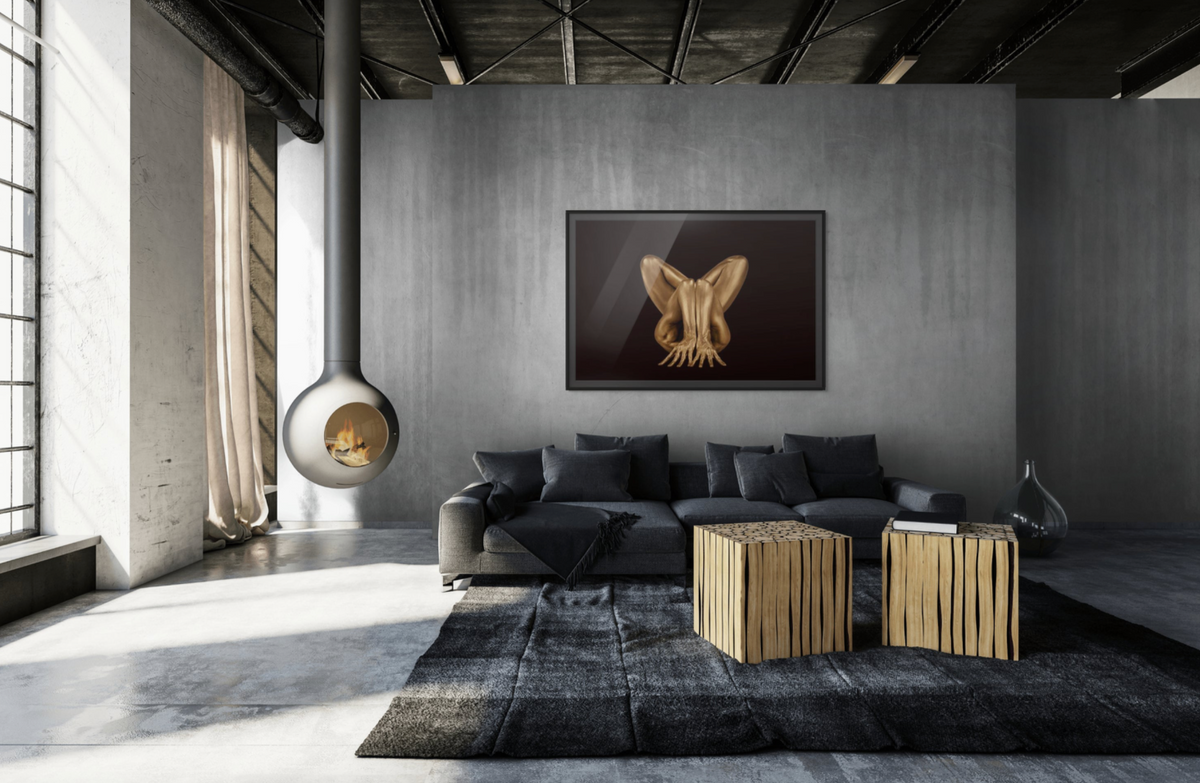
A fine art photograph featuring rich golden tones establishes an extraordinary aesthetic dialogue with dark wood paneling, pale stone, bronze accents, charcoal textiles, or textured plaster common in British architecture.
Interior design inspiration showcased in publications like Homes & Gardens emphasizes how metallic highlights interact with surrounding neutral materials to give a focal wall an undeniable sense of architectural luxury.
When selecting a piece for your home, evaluate its composition and emotional resonance alongside its palette. A contemplative figure suits a quiet library or drawing room, while a dynamic gesture creates a striking focal point in an entrance hallway.
Scale and viewing distance are equally critical. A single large-format print can anchor an expansive wall section, whereas a carefully curated diptych or triptych establishes a sophisticated visual rhythm.
For expert guidance on multi-panel layouts, read Zack’s guide to fine art diptychs, triptychs, and multi-panel photography.
An Ancient Material, an Ongoing Artistic Conversation
Historical gilding demonstrates how a delicate application of gold can elevate an object's visual and symbolic presence. Its power derived from craftsmanship, material integrity, and artistic intent.
Zack Zublena’s photography extends a vibrant contemporary conversation regarding why gold continues to draw our gaze toward the human figure. Light initiates the first encounter, while gesture and expression grant that encounter lasting depth.
Explore the Golden Souls collection and browse Zack Zublena’s complete available collections. To discuss a specific artwork or commission a personal photography experience, please contact Zack Zublena.
Frequently Asked Questions
What is gilding in fine art?
Gilding involves applying a delicate layer of gold onto a supporting substrate such as wood, stone, or metal. Historical examples encompass diverse decorative objects tailored to specific cultural periods.
Were historical gilded surfaces always pure 24-karat gold?
No. Historical gold often contained silver and copper alloy elements, which naturally influenced its color and warmth. Purity varies significantly across different artifacts and eras.
Does Zack Zublena recreate historical gilding techniques?
His portfolio represents contemporary fine art photography. Historical gilding serves as a profound source of aesthetic inspiration within a broader, independent photographic practice.
Do the photographic prints contain actual physical gold?
The luminous golden tones in the photographs capture the visual brilliance created during live studio sessions. Standard fine art prints do not incorporate physical gold leaf unless specifically commissioned as a bespoke modification.
Is 24-karat gold leaf available for bespoke photography experiences?
Yes, genuine 24-karat gold leaf is an available option for selected creative collaborations. Contact Zack to discuss your artistic vision and session requirements.

Written by Zack Zublena