Art for Large Walls: Choosing Fine Art Photography with Zack Zublena

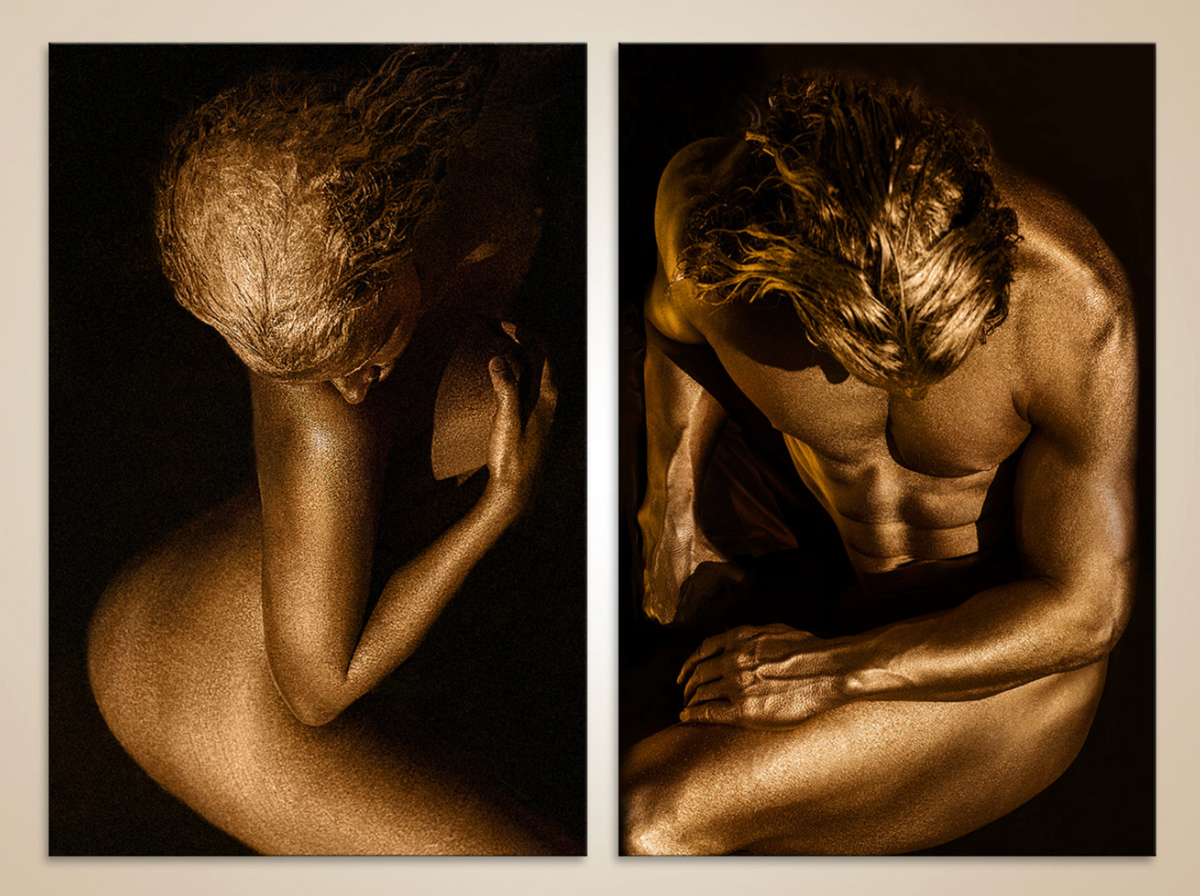
Golden Couple Diptych by Zack Zublena. Two individual compositions create a shared rhythm through golden tones, contemplative gestures, and dark backgrounds. Discover the artwork.
A grand Victorian terrace in London, a converted warehouse in Manchester, or a contemporary residence in Edinburgh all share a common interior design challenge: dressing a large wall. A wall of generous proportions offers immense architectural possibility, but its scale alone does not dictate which artwork belongs there. A photograph may fill the physical dimensions and still feel entirely disconnected from the room. Another, thoughtfully sized, can give a London townhouse drawing room or a country manor sitting room an immediate sense of purpose and soul.
Choosing art for large walls begins with the image itself, then its dialogue with British architecture, period features, modern furnishings, and the natural light shifting through the space. For collectors and interior designers exploring Zack Zublena’s fine art photography—as seen in permanent installations across luxury spaces such as David Lloyd Clubs spa locations across the United Kingdom—the decision often involves a commanding vertical figure, an expansive panoramic composition, or a considered diptych or triptych that establishes a rhythmic flow across the wall.
The overarching aim is to select a piece that captures attention upon entry and continues to reward contemplation over time.
Begin with the Photograph, Then Consider Its Scale
Before measuring your wall space, spend unhurried time with the image itself. Notice where your eye naturally travels, how the human figure inhabits the frame, and what the negative space contributes to the overall composition. Does the photograph feel deeply contemplative, expansive, intimate, or resolute?
Zack Zublena’s gold figurative photography unites real individuals, sculptural body art, and meticulously sculpted studio light. A curve of the spine, a held gesture, or a luminous silhouette gives the image its foundational architecture. Enlarging that photograph enhances its physical presence, but the integrity of the composition must remain the primary reason for your choice.
A wonderful way to refine your aesthetic eye is to study master collections, such as the photographic holdings explored by Tate or the historical and contemporary visual essays featured in The Guardian's art and design section, which examine how curators organize people, light, and space.
When evaluating a potential work for your home, ask yourself two fundamental questions: what draws me toward it, and what makes me want to keep looking? Both matter deeply when a photograph becomes part of your daily environment.
A Vertical Artwork Can Anchor a Wide Wall
A wide wall does not automatically demand a horizontal photograph. In fact, a powerful vertical work can establish an extraordinary focal point, especially when its placement relates deliberately to an antique fireplace, a bespoke console table, or architectural moldings beneath and around it.
A strong vertical figure positioned within a defined wall section draws the eye upward, celebrating high ceilings typical of Georgian and Victorian properties found in London, Bath, or Bristol. Its visual relationship with the room stems from proportion and alignment just as much as raw dimensions.
The surrounding wall acts as a crucial frame of its own, giving the artwork breathing room from nearby furniture. Before opting for a massive format, consider whether the image gains commanding presence or simply consumes empty plaster.
When a Diptych or Triptych Makes Sense
A diptych consists of two panels; a triptych consists of three. These multi-panel formats allow an artwork to span a broad wall while introducing measured intervals that become an integral part of the visual viewing experience.
Some multi-panel layouts divide a single continuous image across frames, while others bring distinct yet resonant photographs into a deliberate conversation. In either case, the conceptual bridge between the panels must feel effortless and assured.
The Golden Couple Diptych illustrating this article brings two separate compositions together in profound harmony. Their 24-karat gold tones, deep dark backgrounds, and inward gestures establish an unmistakable visual rhythm, while each photograph retains its own distinct structure.
This approach is exceptionally effective in expansive open-plan living spaces in cities like Leeds or Birmingham. To dive deeper into these formats, explore Zack’s guide to fine art diptychs, triptychs, and multi-panel photography.
Measure the Installation, Not Just the Print
The dimensions provided for a fine art photograph often refer to the photographic print itself rather than the finished, framed artwork. Custom mounts, floating frames, or traditional mouldings alter the final footprint on the wall.
Measure your usable wall space carefully, factoring in period skirting boards, picture rails, light switches, and radiators. Create a temporary paper template of the outer dimensions and tape it to the wall.
Observe this template from your main seating arrangement, the hallway entrance, and adjacent rooms. Cultural commentary and interior styling advice found in publications like Homes & Gardens frequently emphasize how vital this preliminary mockup step is for British homes.
Choose for the Room’s Different Viewing Distances
A large-scale photograph viewed from across a spacious drawing room requires a composition that remains immediately striking at a distance. Bold silhouettes or dramatic chiaroscuro lighting create an arresting first impression.
Closer encounters offer an entirely different reward. The subtle texture of 24-karat gold leaf, delicate tonal gradations, and intimate details of human gesture sustain fascination long after the initial impact.
Consider both distances when making your selection. Publications such as Country Life frequently highlight how statement art must harmonize with both grand architectural scale and intimate domestic comfort.
Let Gold Create a Relationship with British Materials
In Zack Zublena’s portfolio, rich golden tones establish a magnificent, warm dialogue with classic British materials—dark oak paneling, bronze fixtures, heritage brass, Cotswold stone, or textured clay plaster. Against deep Farrow & Ball-inspired charcoal, navy, or forest green walls, a luminous gold figure introduces a breathtaking focal point.
Your interior does not require matching gold decor items for the artwork to belong. True cohesion arises from balancing warm and cool tones, mirroring architectural curves, or contrasting organic human forms with structured interior design.
Lighting Should Support Viewing and Conservation
Evaluate your chosen wall across changing daylight and evening conditions. Ensure that large windows or table lamps do not create intrusive glass glares that obscure the artwork.
To protect valuable fine art prints, consult professional framing experts and review guidelines from institutions such as the Victoria and Albert Museum (V&A), which offers exceptional resources on the preservation and lighting of delicate cultural objects.
Framing Is Part of the Final Composition
A frame acts as the definitive boundary between the artwork and your interior ecosystem. A minimalist shadow box or floating frame keeps absolute focus on the image, while a classic bespoke profile can reinforce traditional architectural lines.
For multi-panel installations, uniform framing and precise millimeter-level alignment are essential to maintain the intended visual rhythm across the wall.
Choose an Artwork You Want to Return To
The finest art for large walls offers far more than an impressive initial statement. It becomes deeply familiar without ever losing its magic: a nuance catches your eye in the evening light, a gesture takes on fresh meaning, or the piece shifts character as your interior evolves.
Whether you select a commanding vertical piece, a striking diptych, or a balanced triptych, begin with that enduring emotional connection. Architecture and expert placement can elevate the encounter, but the artwork itself must always give you a reason to return.
Explore Zack Zublena’s Golden Souls collection and fine art diptychs and triptychs. To discuss a particular piece, custom sizing options, or your interior design requirements, please contact Zack Zublena.

Written by Zack Zublena