
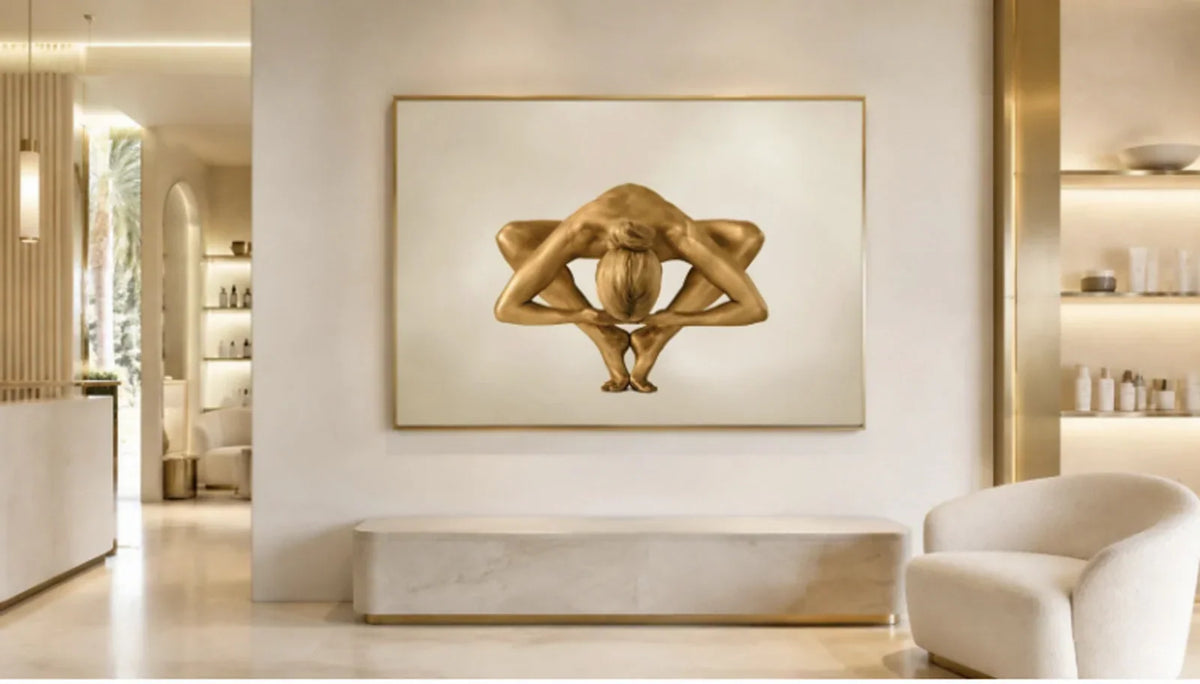
Contemporary Art in London: Gold Fine Art Photography by Zack Zublena
Supernova Genesis — The Beginning of a New Form

London occupies an extraordinary position within the international contemporary art world. With its world-renowned museums, influential photographic institutions, distinguished private collectors and exceptional architectural heritage, the British capital offers a remarkable environment for artistic discovery and collecting.
From Tate Modern and the Victoria and Albert Museum to the galleries of Mayfair, Chelsea and Bermondsey, London brings together historical artistic traditions and innovative contemporary creative practices.
The city's architectural diversity adds another dimension to its cultural identity. Elegant Kensington townhouses, distinguished residences in Chelsea and Belgravia, sophisticated Mayfair apartments, converted industrial lofts in Shoreditch and contemporary penthouses overlooking the Thames provide exceptional settings for fine art.
Within this international artistic landscape, French-American artist Zack Zublena creates gold fine art photography exploring the human body as a sculptural form: a meeting point between movement, light, strength and presence.
On 28 October 2026, Singulart Magazine published an interview with Zack Zublena, exploring his artistic development, the origins of his gold-painted figures, his relationship with classical beauty and the new projects shaping his creative practice.
For collectors searching for Contemporary Art London, Fine Art Photography London, Luxury Wall Art UK or Exclusive Art for London Interiors, his photographic compositions offer a distinctive contemporary artistic perspective.
Supernova Genesis explores the human body through the concentration and balance of a yoga-inspired pose. Presented as a triptych, the composition creates a continuous visual rhythm across three connected images.
The golden silhouette becomes an exploration of symmetry, sculptural presence and artistic transformation. Within a sophisticated London residence, the triptych can introduce a striking focal point against natural stone, dark timber, polished plaster and refined architectural details.
Singulart Magazine
Zack Zublena Interview by Singulart
Discover the original interview, published on 28 October 2026, exploring the transformation of the human body through gold, sculptural photography and the artist's creative vision.
Read the interview on Singulart →Unveiled Instinct — The Power of the Untamed

Unveiled Instinct brings the expressive power of the animal world into a contemporary fine art composition.
The leopard becomes a symbol of alertness, strength and instinct. Through the interplay of golden tones, shadow and form, the image explores the relationship between elegance and untamed energy.
Its dramatic visual identity can create a striking contemporary focal point within a distinguished Mayfair apartment, an elegant Chelsea residence or a sophisticated Kensington townhouse.
The Unbearable Lightness of Being — Golden Beauty Among Blue Roses

The Unbearable Lightness of Being introduces a dreamlike dimension to Zack Zublena's artistic universe. A golden female figure appears suspended among deep blue and emerald-coloured roses, creating a delicate relationship between the human form, flowers, water and the surrounding atmosphere.
The composition explores the feeling of weightlessness and surrender. The translucent floral elements introduce softness and movement, while the gold-painted figure creates a sculptural presence within the image.
The artwork combines figurative photography with a poetic botanical environment, bringing colour and visual depth to a collection otherwise characterised by golden figures, dark backgrounds and carefully directed light.
For collectors in London, this composition can offer a particularly distinctive focal point in a sophisticated bedroom, private sitting room or contemporary interior.
Its blue-green floral palette creates an appealing contrast with warm stone, dark timber, neutral fabrics and understated British interior design.
Birth of Artemis — A Golden Silhouette

Birth of Artemis draws on the timeless presence of the female silhouette.
The golden figure evokes mythology and quiet strength, while the composition focuses on the relationship between posture, light and negative space.
Its sculptural character offers a contemporary interpretation of themes that have fascinated artists throughout history: the human figure, symbolic beauty, movement and transformation.
Within an elegant London interior, the work can establish a poetic contrast with traditional architectural detailing or complement the restrained geometry of contemporary residential design.
Animal Fusion — The Instinctive Connection

Animal Fusion explores the visual and symbolic power of the feline world through a contemporary triptych composition.
The relationship between the images creates continuity, contrast and sculptural presence. Gold intensifies the expressive qualities of the subjects, bringing together the elegance of the leopard and the commanding character of the lion.
The three-panel arrangement offers a distinctive artistic statement for spacious London drawing rooms, sophisticated contemporary apartments and carefully curated private collections.
Moonlit Reverie II — Golden Stillness Against a Black Background

Moonlit Reverie II — Embrace belongs to Zack Zublena's Dark Elegance collection, in which luminous gold-painted figures emerge from deep black backgrounds.
The darkness eliminates visual distractions, directing attention towards the posture, reflective surfaces and emotional presence of the figure.
In his Singulart interview, Zack Zublena identifies Moonlit Reverie II as a particularly meaningful expression of his current artistic approach.
The image combines vulnerability, stillness and contained strength, creating a photographic composition that evokes the presence of a sculptural object.
Within a contemporary Mayfair apartment or an elegant Hampstead residence, the relationship between gold and black can introduce visual depth and a sense of quiet intensity.
Diana — Golden Embrace: Sculptural Elegance in a Refined Interior

Diana, also known as Golden Embrace, explores feminine beauty through reflective gold, carefully controlled lighting and an elegant sculptural pose.
In this interior presentation, the framed photograph appears above a contemporary black bathtub, surrounded by carefully chosen materials and architectural details.
The mock-up demonstrates how figurative fine art photography can become part of a sophisticated interior without losing its artistic individuality.
For luxury London residences, private wellness suites and boutique hospitality environments, a carefully selected photograph can contribute to a distinctive sense of atmosphere and visual identity.
Its presentation within a complete interior also helps collectors understand the work's proportions and its relationship with the surrounding architecture.
Sacred Devotion — A Moment of Inner Presence

Sacred Devotion captures a gesture of contemplation and inward focus.
The golden figure is defined by the simplicity of its posture, allowing the composition to communicate through shape, balance and stillness.
The work invites a moment of reflection, where the physical body becomes a vehicle for expressing a quieter, more universal sense of presence.
Its contemplative atmosphere can complement an elegant London residence, private meditation room, sophisticated British wellness environment or contemporary hospitality interior.
Divine Contour — The Sculptural Language of Gold and Black

Divine Contour reduces the composition to essential visual elements: the human body, its contours and the interaction between reflective gold and controlled light.
The dark background reinforces the sculptural appearance of the figure. Individual surfaces become illuminated forms, while areas of shadow give the image depth.
This aesthetic can create a compelling contrast within contemporary British interiors, particularly in rooms defined by architectural simplicity, pale natural stone, dark oak and carefully selected furnishings.
The image also illustrates Zack Zublena's interest in transforming the physical body into a contemporary artistic form rather than a conventional photographic portrait.
Golden Goddess Portrait — A Contemporary Portrait in Gold

Golden Goddess Portrait approaches the human figure through a contemporary interpretation of portraiture.
Reflective gold creates a luminous sculptural surface, while the dark background allows the composition to focus on posture, form and emotional presence.
The photograph creates a dialogue between classical figurative traditions and contemporary photographic experimentation.
Within a private London collection, the work can be presented alongside painting, sculpture and other photographic artworks, introducing its own distinctive artistic language.
Sacred Golden Bond — The Beauty of Connection

Sacred Golden Bond explores the relationship between two figures through proximity, serenity and shared presence.
The golden surfaces unify the forms while preserving their individual contours, creating an image about connection and harmony.
For a private London collection, its emotional character can introduce a meaningful artistic dimension into an interior defined by sophisticated materials, architectural elegance and carefully selected furnishings.
Salutation to the Sun — Golden Movement Emerging from Darkness

Salutation to the Sun transforms a movement-inspired pose into a golden photographic composition.
The dark background intensifies the reflective surface of the figure, allowing the body to become a study of physical energy, balance and sculptural form.
The image contributes another dimension to Dark Elegance, revealing how changing the posture and direction of light can produce an entirely different emotional expression.
Within a contemporary London interior, its visual contrast can complement natural materials, restrained colours and minimalist architecture.
Axis of Freedom — Balance in Three Dimensions

Axis of Freedom is built around the relationship between balance, movement and spatial rhythm.
The triptych format allows the composition to unfold across three panels, creating a continuous visual experience.
Its golden figure and carefully structured geometry make the work particularly suited to interiors in which art establishes a strong focal point.
Whether displayed in an elegant Belgravia townhouse, a contemporary Chelsea residence or a sophisticated Thames-side penthouse, the composition can establish a distinctive relationship between artwork and architecture.
Midnight Bronze — Masculine Strength Between Gold and Shadow

Midnight Bronze introduces a powerful masculine figure into the Dark Elegance collection.
The crossed-arm posture creates a striking architectural structure, while the interplay of shadow and gold emphasises the physical contours of the body.
The composition expresses a sense of concentration and strength without relying on a conventional narrative.
For collectors interested in figurative contemporary art, Midnight Bronze offers another perspective on the relationship between physical presence, sculptural form and photographic expression.
Animal Fusion — A Dialogue Across Two Panels

In this diptych, the visual dialogue between two panels creates a different experience from a single photographic image.
The paired composition invites the eye to move between forms and details, while the golden treatment brings coherence to the overall work.
Animal Fusion offers a contemporary interpretation of strength, elegance and the instinctive presence of the feline world.
The two-panel format can establish visual balance above a generous sofa, long console or architectural feature within a sophisticated London interior.
Golden Geometry — The Architecture of the Human Form

Golden Geometry brings the human form into conversation with structure, proportion and visual balance.
The body becomes an architectural element, shaped by light and defined by its relationship to space.
Through its restrained composition and golden surface, the work explores the meeting point between organic movement and geometric order.
That relationship between form and architecture is particularly relevant to London, where Georgian and Victorian architectural heritage frequently coexists with sophisticated contemporary residential design.
Singulart Magazine: The Artistic Vision Behind Zack Zublena's Gold Photography
These sixteen photographic works reveal different dimensions of Zack Zublena's artistic practice: gold-painted human figures, dramatic compositions against dark backgrounds, animal-inspired imagery, floral interpretations, diptychs and triptychs.
The interview published by Singulart Magazine on 28 October 2026 provides an opportunity to understand the artistic ideas connecting these works.
Zack discusses the influence of his acting background, his experience as a photographer and his interest in classical art and the expressive possibilities of the human body.
In Los Angeles in 2016, he began photographing dancers, yoga practitioners and contortionists covered in reflective gold body paint.
The process revealed how gold could transform the perception of the human figure. Individual surface characteristics became less prominent, while posture, gesture and controlled lighting acquired greater expressive importance.
The interview also addresses his newer Dark Elegance series and the developing Golden Heroes project.
For British collectors interested in the history and creative intention behind a work, the interview offers a direct perspective on the artist's practice.
Dark Elegance: Contemporary Gold Photography Against Black
Dark Elegance represents a particularly reduced and introspective direction within Zack Zublena's artistic language.
Instead of placing golden figures within brighter environments, the collection uses deep black backgrounds to isolate the body and emphasise its presence.
The contrast between gold and darkness transforms the way the figure is perceived. Illuminated surfaces emerge with unusual intensity, while shadow contributes depth and an atmosphere of stillness.
Moonlit Reverie II, Divine Contour, Golden Goddess Portrait, Salutation to the Sun and Midnight Bronze explore different interpretations of this visual approach.
Some compositions communicate quiet vulnerability and contemplation; others express movement, concentration and physical strength.
The photographs can be presented within contemporary British collections alongside sculpture, painting and other photographic work, creating a dialogue between different artistic materials and approaches.
Tate Modern: London's International Centre for Contemporary Art
At the heart of London's contemporary artistic identity stands Tate Modern, one of the world's most influential museums dedicated to international modern and contemporary art.
Located on Bankside beside the River Thames, Tate Modern occupies the former Bankside Power Station, transformed into an internationally recognised cultural landmark by architects Herzog & de Meuron.
Since opening in 2000, the museum has become a major destination for artistic experimentation, bringing together painting, sculpture, photography, installation, film, performance and other contemporary practices.
Its collections and exhibitions explore how artists have challenged traditional representations of the human body, identity, materials and physical space.
The museum's monumental Turbine Hall provides an especially compelling example of how artworks can transform an architectural environment.
Large-scale installations encourage visitors to consider the relationship between artistic materials, movement, light and the surrounding space.
The Tate institution holds the national collection of British art from 1500 to the present day, alongside international modern and contemporary art.
For collectors interested in Contemporary Art London, Tate Modern offers an essential perspective on the range of artistic practices that shape today's international art world.
Zack Zublena's gold fine art photography belongs to this wider conversation through its exploration of the body, material transformation and sculptural composition.
Rather than documenting a figure in a conventional manner, his photography uses reflective gold and carefully directed light to create a distinctive artistic presence.
The Victoria and Albert Museum: An Extraordinary British Photography Collection
Few institutions have contributed more significantly to the history and appreciation of photography in the United Kingdom than the Victoria and Albert Museum, commonly known as the V&A.
Located in South Kensington, the museum has collected and exhibited photography since the 1850s, establishing one of the world's most significant photographic collections.
The V&A Photography Centre is a major British institution dedicated to the presentation of photography from its earliest years to the present.
Expanded in 2023, the centre presents photographic works across seven galleries, exploring the evolution of the medium from the nineteenth century to contemporary artistic practice.
Its collection includes early photographic processes, fashion photography, portraiture, documentary imagery, contemporary artistic experimentation and digitally created works.
The Photography Now galleries present international contemporary photographic practices, while Photography 1840s–Now explores the medium's historical development.
The centre also includes a Digital Gallery dedicated to photography's changing relationship with technology.
For collectors researching Fine Art Photography London or Fine Art Photography UK, this institution provides an exceptional reference.
Photography is not limited to reproducing visible reality. It can transform a subject through composition, experimentation, symbolism, performance and carefully controlled light.
Zack Zublena's golden photographic works explore this transformative potential through a distinctive combination of reflective body paint, human movement and sculptural illumination.
The National Portrait Gallery: Photography, Identity and the Human Figure
Portraiture occupies an important place within London's artistic heritage.
The National Portrait Gallery, located near Trafalgar Square, is one of Britain's most important institutions devoted to the representation of people through art.
Its collections encompass painting, drawing, sculpture and photography, presenting different approaches to the interpretation of human identity and presence.
The museum's Photographs Collection spans the history of photography from the nineteenth century to the present day, revealing the medium's evolution through changing artistic and technical practices.
Photographic portraiture can communicate individual identity, social history and emotional presence.
In contemporary photography, the human figure can also be transformed through staging, visual abstraction and symbolic artistic choices.
This latter approach is particularly relevant to Zack Zublena's work.
Rather than seeking a conventional likeness, his photographic compositions transform the body into a golden sculptural subject, shifting attention towards gesture, movement, surface and the relationship between the figure and light.
London's long tradition of portraiture provides a meaningful context for considering these different artistic approaches to the human form.
The Photographers' Gallery: A British Institution Dedicated to Photography
London has played a pioneering role in establishing photography as an independent artistic discipline.
The Photographers' Gallery, founded in 1971 by Sue Davies, was the United Kingdom's first public gallery devoted specifically to photography.
Originally established in Covent Garden, the institution helped transform the public understanding of photography by presenting the medium as a significant form of creative expression.
Today, the gallery is located on Ramillies Street in Soho, within London's West End.
Its exhibitions explore historical and contemporary photography, introducing audiences to established practitioners as well as new creative voices.
The gallery has played an important role in developing recognition for artists whose photographic work engages with fashion, portraiture, documentary imagery and conceptual experimentation.
Its programmes and public activities include exhibitions, educational initiatives, photography prizes and projects supporting the exploration of the medium.
The surrounding Soho Photography Quarter offers an additional public setting for photographic exhibitions and events.
For collectors, the Photographers' Gallery demonstrates the importance of photography within London's contemporary artistic culture.
It also reinforces an essential principle: photographic artworks can communicate complex visual ideas through composition, lighting, material experimentation and the individual vision of the artist.
Photo London: The United Kingdom's International Photography Fair
London's position within the international photography market is particularly visible through Photo London, a major fair devoted to photography and image-based art.
The 2026 edition took place from 14 to 17 May at Olympia London in Kensington.
Photo London brings together galleries, photographers, curators, collectors and publishers from the United Kingdom and around the world.
The fair presents historic photographic works alongside contemporary imagery, experimental processes and emerging artistic perspectives.
Its 2026 programme included an exhibition dedicated to photographer Steven Meisel, recognised as Master of Photography.
The fair also highlighted developing photographic talent through curated presentations, awards and professional opportunities.
A May 2026 Guardian feature on the Photo London Emerging Photographer Award introduced shortlisted photographic works demonstrating the breadth of the contemporary medium.
From experimental portraiture to conceptual compositions, the presentation reflected photography's capacity to interpret familiar subjects through an individual visual language.
For collectors exploring Fine Art Photography in the United Kingdom, Photo London provides an important example of the medium's established presence within the international art market.
Frieze London: An International Meeting Point for Contemporary Art Collectors
London's international artistic identity is closely connected with Frieze London, one of the world's most influential contemporary art fairs.
Founded in 2003 by Amanda Sharp and Matthew Slotover, the fair focuses on contemporary art and living artists, bringing leading international galleries to the British capital.
The 2026 edition took place in Regent's Park from 14 to 18 October, attracting collectors, museum professionals, curators and artists from around the world.
According to Frieze's official 2026 guide, the contemporary fair presented galleries from numerous countries and regions.
Its programmes included solo presentations, emerging artists, experimental installations and curated exhibitions exploring new artistic practices.
Alongside Frieze London, Frieze Masters introduced collectors to significant historical works, creating a dialogue between different periods of art history.
The official report on the October 2026 fairs documented important sales, museum acquisitions and presentations by internationally recognised galleries.
The event demonstrates London's position as an essential destination for collectors interested in both established artists and emerging contemporary practices.
Photography participates in this wider artistic landscape alongside painting, sculpture, installation and performance.
For private collectors, Frieze offers opportunities to develop individual artistic interests, encounter new visual perspectives and consider how contemporary artworks can contribute to a personal collection.
The Royal Academy of Arts: A British Tradition of Artistic Discovery
London's contemporary art environment is also influenced by the Royal Academy of Arts, founded in 1768.
Located at Burlington House on Piccadilly, the Royal Academy has played an important role in British artistic life through exhibitions, education and the promotion of visual art.
Its famous Summer Exhibition has provided opportunities for artists to present work to the public for more than two centuries.
The 2026 Summer Exhibition brought together a broad range of artistic practices, including painting, sculpture, photography, printmaking and architecture.
The Royal Academy's continuing tradition demonstrates that British artistic culture embraces both established forms of expression and the experimentation of contemporary artists.
For collectors, this diversity encourages an appreciation of artworks based on artistic vision, individual expression and creative quality rather than a single medium or stylistic category.
Saatchi Gallery: Contemporary Art in Chelsea
Within Chelsea, the Saatchi Gallery has developed an international reputation for presenting contemporary art and introducing emerging creative voices.
Founded in 1985 by collector Charles Saatchi, the gallery contributed to the visibility of artists who would later achieve international recognition.
Since 2008, it has occupied the historic Duke of York's Headquarters on King's Road, providing an important cultural destination in one of London's most distinguished residential and design districts.
In 2019, Saatchi Gallery became a registered charity, continuing its commitment to contemporary art and public engagement.
Its exhibition programme encompasses painting, photography, sculpture, installations and projects exploring contemporary creative culture.
The gallery's history illustrates how private collecting interests and a commitment to presenting new artistic ideas can contribute to the broader cultural landscape.
For collectors based in Chelsea, Kensington and Belgravia, the institution offers a particularly relevant local connection between contemporary art and sophisticated residential environments.
Gold as a Contemporary Artistic Language
Gold has carried symbolic meaning across cultures and centuries. It can suggest light, transformation, value, spirituality and permanence.
In Zack Zublena's work, gold is approached as a contemporary artistic material and visual language.
Applied to the human figure, it changes the way the body is perceived. Contours become sculptural, gestures gain intensity, and the relationship between light and shadow becomes central to the composition.
The resulting photographs bring together fine art photography, the aesthetics of sculpture and a strong sense of visual minimalism.
The human form is not simply documented. It is transformed into a carefully constructed artwork in which posture, negative space, texture and illumination contribute to the final expression.
In London, where centuries of artistic heritage coexist with contemporary experimentation, this visual language can create a compelling dialogue between historical traditions of figuration and modern photographic expression.
The Wallace Collection: A London Legacy of Private Art Collecting
London has a distinguished tradition of private art collecting, with important institutions originating from the individual interests and aesthetic convictions of their founders.
One of the most remarkable examples is the Wallace Collection, housed at Hertford House in Manchester Square, Marylebone.
The collection was assembled during the eighteenth and nineteenth centuries by the Marquesses of Hertford and Sir Richard Wallace.
It includes important paintings, sculptures, decorative arts, furniture, porcelain and arms and armour.
In 1897, Lady Wallace bequeathed the collection to the British nation, enabling future generations to experience it within a historic London residential setting.
Today, the museum preserves an extraordinary relationship between artwork, architecture and sophisticated interior decoration.
The paintings and objects are displayed within rooms whose character reflects the history of private collecting and the aesthetic preferences of the collection's former owners.
The collection demonstrates how fine art can become inseparable from the atmosphere and identity of a residence.
For contemporary collectors, this offers an important perspective: the relationship between art and interior design can be deeply personal.
An artwork is not merely an accessory to architecture. It can contribute to the meaning, visual character and emotional experience of a space.
Mayfair: London's International Art Gallery District
Mayfair is one of London's most important destinations for fine art, luxury interiors and international collecting.
The neighbourhood's elegant Georgian architecture, historic squares and distinguished commercial galleries create an environment where contemporary artwork can be discovered alongside significant historical pieces.
According to the official Visit London guide to Mayfair and St James's, the area brings together leading galleries, specialist art dealers, auction houses and important cultural institutions.
Cork Street has an especially significant place in London's gallery history, with a longstanding concentration of galleries presenting modern and contemporary artwork.
The Cork Street gallery guide documents the neighbourhood's artistic heritage, including The Mayor Gallery, which opened in 1925.
Over time, the gallery contributed to the British recognition of significant European and American artists, including figures associated with Dada, Surrealism, Pop Art and modern abstraction.
Mayfair also includes established gallery spaces such as White Cube Mason's Yard, along with specialist dealers presenting photography, sculpture and works on paper.
The area's international collecting culture provides an important context for contemporary fine art photography.
For collectors searching for Luxury Fine Art London, Mayfair remains a destination where historical artistic traditions and contemporary creative practices can be explored together.
Bermondsey: White Cube and London's Contemporary Gallery Culture
South London has developed an influential contemporary gallery community, particularly around Bermondsey Street and the surrounding neighbourhoods.
One of its most significant destinations is White Cube Bermondsey, located at 144–152 Bermondsey Street.
Opened in 2011, the gallery occupies an extensive former industrial building transformed into a series of contemporary exhibition spaces by architects Casper Mueller Kneer.
The galleries provide large interior volumes, dedicated exhibition rooms, a bookshop and spaces for public and private viewing.
Its programme presents significant contemporary artists working across different artistic media, from painting and sculpture to photography and installation.
The architectural transformation of the building also illustrates an important feature of London's creative culture: historic industrial structures can become environments for presenting innovative contemporary artworks.
For private collectors, these exhibition spaces provide inspiration for displaying art within modern residential environments.
A photograph can introduce warmth and human presence against the structural geometry of an industrial-style interior.
A large diptych or triptych can create a visual rhythm across a substantial wall, while a single photographic composition can establish an intimate focal point.
Serpentine: Contemporary Art and Architecture in Kensington Gardens
London's commitment to artistic experimentation is also reflected in Serpentine, an influential contemporary art institution located in Kensington Gardens.
Since 1970, Serpentine has presented exhibitions, architectural projects, performances and public programmes exploring innovative creative ideas.
Its two gallery spaces, Serpentine South and Serpentine North, present international contemporary artists within the distinctive landscape of Kensington Gardens.
The institution is particularly recognised for its annual architectural Pavilion commission, in which an architect or designer creates a temporary structure for public use.
As described in Serpentine's institutional history, the Pavilion programme explores the relationship between architecture, artistic expression and the surrounding landscape.
The exhibitions and architectural commissions encourage audiences to consider how artistic experiences can be transformed by physical space.
For fine art collectors and interior designers, this relationship is especially significant.
An artwork is not perceived independently of its surroundings. Proportion, materials, lighting and architectural context all contribute to the way the viewer experiences the work.
Gold photographic compositions can establish a compelling presence within interiors where architectural form and visual simplicity are central to the design.
Tate Britain: The Historical Foundations of British Artistic Expression
The relationship between contemporary art and British artistic heritage can also be explored through Tate Britain, located on Millbank beside the Thames.
The museum presents British art spanning several centuries, including major works associated with artists such as J. M. W. Turner, John Constable, William Blake and Francis Bacon.
Its collections demonstrate the different ways artists have explored the human figure, movement, light, colour and artistic identity.
The museum also presents works by contemporary British artists, connecting historical artistic traditions with new creative practices.
For collectors interested in modern and contemporary photographic expression, this relationship between past and present provides a meaningful perspective.
The materials and techniques of art continue to evolve, but many fundamental artistic questions remain.
How can an artist communicate movement through a static composition? How can light transform a familiar subject? How can the human figure become a vehicle for expressing identity, emotion or symbolism?
Zack Zublena approaches these questions through the reflective qualities of gold and the expressive possibilities of staged fine art photography.
London's Private Art Collectors: Creating Homes Around Art
London has a longstanding tradition of collecting art within private residences, from historic townhouses and distinguished estates to sophisticated contemporary apartments.
A compelling contemporary example appears in House & Garden's 2026 feature on the Chelsea townhouse of jeweller Celia Weinstock.
The residence was designed around an existing collection of artworks, antiques, decorative objects and inherited family pieces.
Rather than arranging the collection only after the renovation had been completed, the owners and designers considered the artworks and furnishings from the beginning.
Individual pieces were measured and incorporated into the architectural drawings, allowing the character of the collection to influence the design of the rooms.
The result demonstrates how a private home can become an expression of personal history and aesthetic conviction.
For contemporary art collectors, this approach is especially meaningful.
Fine art can influence the lighting, furnishing arrangements, architectural proportions and emotional character of a residence.
A photograph selected for its artistic language and personal significance may become a defining part of the interior rather than merely a decorative addition.
House & Garden: An Art Collector's Kensington Home
Another important local example appears in House & Garden's January 2026 feature on the Kensington home of designer and art collector Romanos Brihi.
The residence occupies a Victorian property transformed into a distinctive living environment combining carefully selected art, expressive colour and sophisticated furnishings.
The collection includes works and lithographs associated with artists such as Henri Matisse and Le Corbusier.
The interior demonstrates how a personal art collection can influence the atmosphere of a home through the relationship between individual artworks, furniture, colour and architectural detail.
Rather than relying on a uniform decorative formula, the residence brings together different visual references in an environment that reflects the collector's interests.
For collectors considering gold fine art photography, the example offers an important perspective.
A distinctive photographic composition can become part of a broader personal collection, contributing a contemporary visual language alongside painting, sculpture and works on paper.
Kensington and Chelsea: Architecture, Contemporary Art and Individuality
Kensington and Chelsea contain some of London's most distinguished residential architecture, with an extraordinary variety of Georgian, Victorian and contemporary properties.
Elegant townhouses, converted artists' studios, historic mansion flats and carefully renovated mews houses create environments where contemporary artworks can interact with different architectural forms.
A 2026 House & Garden feature on a contemporary Kensington residence designed by Tobias Vernon explores how a personal collection of art, rich colours and sculptural furnishings transformed an unconventional property.
The residence incorporated elements of older buildings and an artist's studio, creating a distinctive environment in which art and interior design were closely connected.
The project illustrates how contemporary artwork can contribute to a home that feels individual, layered and visually compelling.
In a sophisticated Kensington residence, a gold photographic composition can introduce sculptural warmth against natural stone, textured plaster or dark timber.
Within a traditional Chelsea townhouse, an artwork featuring a golden silhouette can create an unexpected contemporary contrast against decorative mouldings and historical architectural details.
London's Architectural Heritage: From Georgian Townhouses to Contemporary Penthouses
London's residential architecture offers an exceptional variety of settings for contemporary fine art.
Mayfair and Belgravia are particularly associated with distinguished Georgian architecture, elegant façades, refined proportions and historic residential character.
Chelsea and Kensington combine Victorian and Georgian townhouses with sophisticated contemporary renovations and individually designed apartments.
Marylebone offers historic mansion flats, Georgian terraces and carefully restored properties, while Hampstead presents a distinctive mixture of period houses, modernist architecture and residences overlooking landscaped gardens.
In Shoreditch and Clerkenwell, converted warehouses and former industrial buildings provide contemporary loft environments with generous spaces and exposed architectural materials.
Along the Thames, developments in Battersea, Nine Elms and Canary Wharf offer modern residential interiors characterised by expansive glazing and contemporary materials.
Each environment presents different possibilities for displaying fine art photography.
A luminous golden figure can introduce a compelling contrast within a traditional Georgian drawing room.
A diptych can establish visual dialogue above a long console or sofa in a contemporary Chelsea apartment.
A triptych can provide sculptural rhythm across a substantial wall within a riverside penthouse.
Design Centre, Chelsea Harbour: London's Luxury Interior Design Destination
London's sophisticated interior design community is supported by internationally recognised institutions connecting designers, architects and private collectors with exceptional decorative materials and furnishings.
One of the most important is Design Centre, Chelsea Harbour, located on Lots Road in West London.
The centre brings together an extensive network of interior design showrooms and international brands, providing resources for residential and commercial projects.
Its showroom directory includes brands specialising in furniture, fabrics, lighting, wall coverings, rugs and decorative materials.
The design centre is an important destination for interior designers working on prestigious residential properties, hospitality environments and international projects.
Its programme of events includes London Design Week and other initiatives bringing together leading creative professionals and design enthusiasts.
For collectors seeking Luxury Wall Art London or Exclusive Art for London Interiors, the relationship between artwork and interior design is especially important.
A photograph can influence the visual balance of a room, its atmosphere and the relationship between different materials.
Gold fine art photography introduces a distinctive visual quality, creating warmth and contrast against marble, dark walnut, natural textiles, decorative metal and understated architectural finishes.
London Design: A Georgian Townhouse Transformed into a Living Artwork
A particularly compelling example of contemporary London residential design appears in House & Garden's April 2026 feature on a Georgian townhouse redesigned by RV DM Studio and Geraldine Dohogne.
The property was transformed through sculptural architectural interventions, richly textured materials, veined marble and carefully considered furnishings.
A dramatic double-height atrium and sculptural staircase became essential elements of the interior, demonstrating how architecture itself can take on an artistic presence.
The project explores the relationship between historic architectural proportions and modern sculptural expression.
Within such an environment, fine art photography can introduce another layer of visual meaning.
A carefully composed golden figure can echo the geometry of a sculptural staircase, while its luminous surface creates contrast with natural stone and textured materials.
The artwork and the architecture remain distinct, yet together they can contribute to a more expressive and memorable interior.
Chelsea Townhouses: Contemporary Art and British Interior Design
Chelsea's residential architecture offers an especially meaningful setting for contemporary fine art.
Historic Victorian and Georgian townhouses frequently combine original architectural details with sophisticated modern renovations.
A 2026 House & Garden feature on a Chelsea residence redesigned by Taylor Howes demonstrates how carefully selected furnishings, artwork and decorative materials can create an elegant, individual interior.
The property was developed from two split-level flats into a sophisticated townhouse with spaces designed for entertaining and private living.
The project incorporates warm timber, natural stone, atmospheric lighting and carefully chosen contemporary artwork.
Its interiors demonstrate how art can contribute to the emotional character of a residence rather than simply providing visual decoration.
For collectors interested in contemporary photography, a strong artistic composition can create a memorable focal point within this type of environment.
London's Photography Market: From Specialist Galleries to International Collecting
London is an important international centre for collecting photographic art.
The V&A's historic collection, the Photographers' Gallery's exhibition programme and Photo London's international fair demonstrate the medium's established position within British artistic culture.
The city's commercial galleries also contribute to this environment by presenting photographs across different historical periods and creative approaches.
Collectors can encounter historical prints, modernist images, contemporary portraiture, conceptual works and experimental photographic techniques.
The British design publication Wallpaper*'s guide to Photo London 2026 explored the range of contemporary photography presented at the fair.
Its coverage included work by established and emerging photographers, as well as projects experimenting with photographic techniques, representation and personal identity.
For collectors, this breadth of expression creates opportunities to develop a collection based on individual artistic interests.
Photography can offer a distinctive visual experience through composition, contrast, symbolism and the artist's unique interpretation of a subject.
London's Contemporary Art Scene: From Mayfair to East London
London's contemporary gallery community extends beyond its most established commercial districts.
Mayfair remains an important international destination for modern and contemporary artworks, supported by longstanding galleries, specialist dealers and major auction houses.
Chelsea connects contemporary art with a sophisticated community of designers and collectors.
In Bermondsey, large exhibition spaces and former industrial buildings contribute to a different gallery environment.
Shoreditch and East London have their own creative identity, shaped by independent galleries, artist-run projects and experimental cultural organisations.
London's artistic culture is therefore not defined by a single neighbourhood or style.
Its strength lies in the ability to connect historical artistic traditions with contemporary experimentation, international galleries and independent creative perspectives.
For collectors interested in modern photographic art, this diversity provides opportunities to appreciate work across a wide range of visual languages.
Contemporary Art in the United Kingdom: Beyond London's Major Museums
Although London is an international centre for contemporary collecting, Britain's artistic landscape extends across the country through important museums, galleries, art schools and regional creative communities.
The Tate network includes Tate Modern and Tate Britain in London, alongside Tate Liverpool and Tate St Ives in Cornwall.
Together, these institutions contribute to the presentation and preservation of modern, contemporary and historical British art.
The V&A's photography collections provide an international reference for the history of photographic art, while regional galleries and creative organisations support artists working across the United Kingdom.
British collectors therefore have opportunities to engage with contemporary artistic expression through a wide network of cultural institutions.
From distinguished London townhouses to contemporary residences in Surrey, the Cotswolds and other parts of the country, fine art photography can complement a variety of architectural environments.
In a traditional English country residence, a golden photographic silhouette may introduce a compelling contemporary contrast against historic materials and decorative architectural details.
Within a modern British home, a triptych can bring sculptural rhythm to an interior defined by natural timber, glass and understated furnishings.
British Collecting Traditions: Art as a Personal Expression
The history of British art collecting reveals how strongly artistic interests can influence the character of private residences.
The Wallace Collection demonstrates how a remarkable personal collection can become part of the national cultural heritage.
Contemporary London homes featured by House & Garden provide more intimate examples of the relationship between individual collecting and residential design.
Whether a collection includes historical paintings, contemporary photography, sculpture or works on paper, its character often develops through personal discoveries and meaningful encounters with individual artworks.
A thoughtfully selected photograph can become part of this process.
Its appeal may be connected to its composition, emotional presence, symbolism or the individual artistic vision of its creator.
For collectors considering Contemporary Fine Art Photography UK, the medium offers a wide range of approaches to collecting, from historical imagery to contemporary experimental works.
Luxury Wall Art London: Choosing Art for Sophisticated Interiors
London's residential architecture offers exceptional opportunities for displaying contemporary photographic artwork.
In a distinguished Mayfair apartment, fine art can create a sophisticated visual presence within a room characterised by elegant proportions, decorative architectural details and carefully selected materials.
In a Chelsea townhouse, a contemporary photograph can introduce a new artistic perspective without diminishing the property's historic character.
In a minimalist Kensington interior, a golden silhouette can establish warmth and visual focus against restrained furnishings.
Within a contemporary riverside penthouse, a diptych or triptych can introduce sculptural rhythm across an expansive wall.
The relationship between artwork, scale, lighting and architecture is particularly important.
A photograph should not simply be selected to fill a space or match a decorative colour scheme.
The most meaningful works can introduce emotional presence, individuality and artistic depth into the surrounding environment.
Diptychs and Triptychs: A Contemporary Approach to Multi-Panel Fine Art
Two-panel and three-panel photographic compositions offer particular possibilities for collectors and interior designers.
A diptych creates a visual dialogue between two images, allowing their relationship to contribute to the overall artistic experience.
A triptych extends this dialogue across three panels, creating a wider sense of movement, continuity and proportion.
Supernova Genesis and Axis of Freedom demonstrate different interpretations of the golden human figure through the triptych format.
Animal Fusion explores a similar relationship through the strength and elegance of animal imagery.
These compositions can be particularly effective within spacious living rooms, private galleries, entrance halls and contemporary residential interiors.
Explore Zack Zublena's gold fine art diptychs, triptychs and coordinated photographic sets.
Contemporary Photography for Luxury Hotels, Spas and Wellness Interiors
Fine art photography can contribute to the visual identity of luxury hotels, private spas, wellness environments and sophisticated hospitality spaces.
In London, where historic buildings frequently undergo contemporary renovation, the relationship between art and interior design can become an important part of the visitor experience.
A contemplative golden figure can introduce an atmosphere of serenity within a private wellness suite.
A bold triptych can provide visual rhythm within a reception space or a generously proportioned lounge.
Works from the Dark Elegance collection create a different effect, using black backgrounds and luminous gold to establish contrast and depth.
The framed presentation of Diana — Golden Embrace above a black bathtub offers an example of how a photograph may be visualised within a sophisticated interior.
For actual installations, appropriate framing and protection from moisture, humidity and direct sunlight should be considered, particularly in spa and bathroom environments.
Photography and Contemporary British Artistic Expression
Photography occupies an important position within Britain's artistic heritage and contemporary cultural identity.
The V&A's collection documents the development of the medium from its earliest decades, while the National Portrait Gallery explores the representation of human identity through photographic images.
The Photographers' Gallery supports historical and contemporary photographic expression, and Photo London connects collectors with galleries and creative practitioners from around the world.
British institutions continue to present photography alongside painting, sculpture, film and experimental artistic practices.
This approach reflects photography's ability to move between different creative disciplines.
For Zack Zublena, the photograph is the culmination of an artistic process involving the human body, reflective gold, carefully controlled lighting and the construction of a sculptural composition.
The resulting artwork explores a relationship between performance, material transformation and the photographic image.
Art, Architecture and Individuality in London Homes
London's architectural diversity creates a compelling environment for art collectors who want their interiors to express a distinctive personal identity.
The art-filled homes featured by House & Garden demonstrate different approaches to this relationship.
Some collectors develop rooms around an existing collection of painting, sculpture and decorative objects.
Others combine contemporary artworks with traditional architectural details, creating interiors in which different historical periods coexist.
Within minimalist modern residences, photographic compositions can introduce a strong artistic presence without overwhelming the architectural environment.
Gold fine art photography offers opportunities to explore these relationships through the interaction between the luminous human figure, surrounding materials and carefully considered lighting.
From Los Angeles to London: Zack Zublena's Gold Fine Art Photography
Zack Zublena began developing his distinctive gold photographic language in Los Angeles in 2016, exploring reflective body paint, the expressive beauty of the human form and carefully controlled photographic illumination.
That exploration developed into a contemporary artistic practice in which photography, body painting and sculptural composition are closely connected.
Within his broader creative practice, Zack has also explored the use of real 24-karat gold leaf, extending his interest in the symbolic and material qualities of gold.
For collectors discovering his work in London, this artistic history provides a meaningful perspective on the photographs.
His work does not simply use gold as an ornamental colour. Gold transforms the perception of the physical figure, emphasising movement, sculptural form and the relationship between light and surface.
These qualities can create a compelling visual presence within London's diverse architectural environments.
From distinguished Georgian townhouses to contemporary apartments and sophisticated hospitality interiors, the photographic compositions bring a distinctive artistic language to spaces throughout the United Kingdom.
Read the Original Zack Zublena Interview in Singulart Magazine
Published on 28 October 2026, the Singulart interview provides a personal introduction to Zack Zublena's artistic philosophy.
The conversation explores the origins of his gold photography, his creative influences, his collaborative approach to photographing models and his developing artistic projects.
For collectors across London and the United Kingdom, it offers an opportunity to discover the artist's intentions beyond the photographs themselves.
Singulart Magazine
Zack Zublena: The Singulart Interview
Read the original conversation about gold, classical beauty, human expression and the photographic vision of French-American artist Zack Zublena.
Read the interview on Singulart →Discover Zack Zublena's Gold Fine Art Photography in London and the United Kingdom
London's artistic identity is shaped by Tate Modern, Tate Britain, the Victoria and Albert Museum, the National Portrait Gallery, the Photographers' Gallery, the Royal Academy of Arts, Saatchi Gallery, Serpentine and an internationally influential community of galleries and private collectors.
From the prestigious galleries of Mayfair to the creative districts of Chelsea, Bermondsey and East London, the city offers exceptional opportunities to discover contemporary fine art.
Its architectural heritage, sophisticated interior design community and distinguished tradition of private collecting provide equally compelling environments for fine art photography.
Zack Zublena's gold photographic work introduces another perspective to this international artistic landscape.
Through the transformation of human and animal forms, his work explores strength, balance, instinct, contemplation, connection and timeless beauty.
His floral compositions, including The Unbearable Lightness of Being, introduce a different relationship between the golden figure, colour and natural forms.
His Dark Elegance series explores the contrast between light and shadow, creating introspective and sculptural photographic images.
Whether displayed in an elegant Chelsea townhouse, a distinguished Belgravia residence, a sophisticated Mayfair apartment, a contemporary London penthouse or a private collection elsewhere in the United Kingdom, gold photographic artwork can introduce a distinctive and memorable presence.
Explore the Golden Souls Fine Art Photography Collection and discover the artworks available through ZackZublena.com.
For collectors interested in coordinating photographic artwork across multiple walls, explore the gold fine art diptychs, triptychs and curated sets.
For enquiries, artwork information or assistance with a residential, hospitality or interior design project in London or elsewhere in the United Kingdom, visit the contact page.

