Article: Ancient Egyptian Gold Gilding: Light, the Human Figure, and Zack Zublena’s Art
Ancient Egyptian Gold Gilding: Light, the Human Figure, and Zack Zublena’s Art

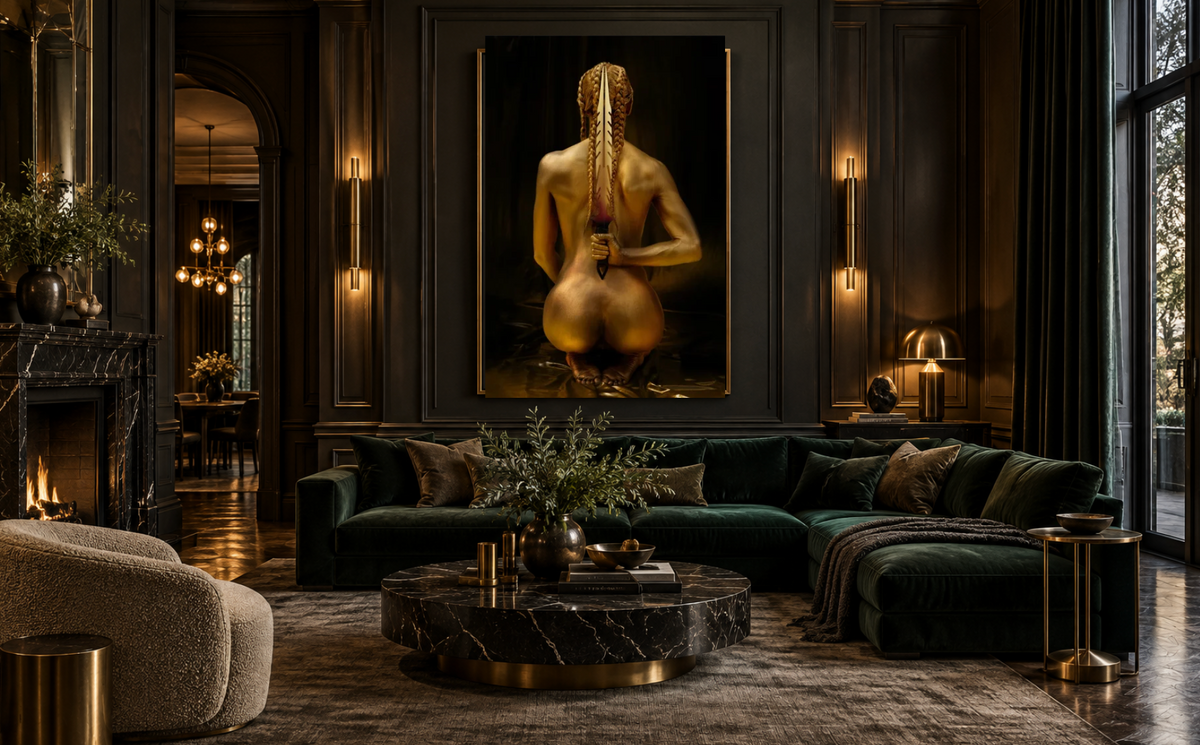
Hidden Horus by Zack Zublena, shown in a contemporary interior visualization exploring gold, sculptural form, and light. Discover Hidden Horus and available formats.
Gold can transform how we see a surface. It catches light, emphasizes a contour, and gives an object a presence that feels different from its underlying material. Ancient Egyptian artisans explored its visual possibilities, using gold in jewelry, sacred objects, and funerary works.
For Zack Zublena, that history offers a point of artistic reflection. The French-American photographer’s golden figures explore the relationship between the human body, light, and transformation. His work belongs to a contemporary photographic practice, while engaging with the enduring fascination of gold.
Understanding ancient Egyptian gilding brings that conversation into sharper focus: how was gold used, what could it signify, and how can a contemporary artist respond to its visual heritage?
What Is Gilding?
Gilding means applying a layer of gold to another material. A gilded object may have a wooden, stone, or metal support beneath its golden surface. Its luminous appearance does not mean that the entire object is made from solid gold.
Gold’s malleability makes this possible: it can be hammered into thin sheets and leaf. The Smithsonian’s National Museum of Asian Art explains these material properties in its guide to gold and the ways artists work with it.
The distinction matters when looking at ancient objects. A solid gold ornament, a surface covered with gold foil, and a gilded wooden figure represent different material choices and forms of craftsmanship.
How Ancient Egyptian Artisans Used Gold
Ancient Egyptian goldworking involved varied techniques rather than one universal method. Artisans hammered, shaped, joined, and decorated gold, choosing processes appropriate to the object they were making.
The Metropolitan Museum of Art’s essay Gold in Ancient Egypt describes gold’s use in thin sheets and leaf, alongside other methods of working the metal. Surviving objects include examples in which a golden layer was combined with a different underlying material.
For gilding, the support and its preparation mattered. Some objects incorporated preparatory layers beneath the gold; the way the metal was attached depended on the surface and the technique. A wooden object and a metal object should not be assumed to have followed the same workshop process.
Historical gold also varied in composition. Egyptian gold often contained silver, which affected its color. It is therefore misleading to describe every ancient golden surface as pure 24-karat gold.
To understand a particular work, begin with its documented materials, date, and context. The object itself provides more useful evidence than a generalized recipe for Egyptian gilding.
Why Gold Could Carry Sacred Meaning
In ancient Egyptian religious contexts, gold could be associated with the sun, divine flesh, and enduring existence. Its brilliance and resistance to corrosion helped make it a meaningful material for objects connected with gods and the afterlife.
Those associations do not give every gold object the same meaning. Jewelry worn during life, a temple object, and a funerary image each belonged to a particular setting. Their interpretation depends on that setting, accompanying imagery, and any inscriptions.
The Museum of Fine Arts, Boston’s collection of art from ancient Egypt, Nubia, and the Near East offers a broad resource for exploring this material and cultural variety.
Looking closely at individual works allows gold to become more than a general symbol of wealth. It can be understood as part of an object’s purpose, craftsmanship, and relationship with the person who used or commissioned it.
A Golden Surface Can Change the Presence of a Figure
One of gilding’s most compelling effects is the relationship between a thin surface and the form beneath it. Light emphasizes a face, a curve, or a modeled detail, giving that form a heightened visual presence.
The Penn Museum’s account of objects from early royal burials at Abydos includes gold foil used to decorate an object and limestone statuary retaining traces of gilding. These examples show how gold could become part of a work made from other materials.
For a contemporary viewer, this invites attention to the interaction between surface and structure. The gold is one part of the experience; the shape beneath it determines how that surface is encountered.
That relationship also offers a useful way to approach Zack Zublena’s photography. A golden appearance draws the eye, while the person’s pose, gesture, and expression give the image its character.
Portraiture and Gold in Roman Egypt
Egypt’s artistic history spans many periods. Works created under Roman rule belong to a different context from those of earlier pharaonic dynasties, even when they retain connections with Egyptian funerary traditions.
Getty’s study of the portrait mummy of Herakleides provides a specific example. Its painted portrait includes gilding, bringing individual likeness and a golden surface into the same work.
Such objects encourage careful looking at the relationship between representation and material. A face can communicate individual presence while its surrounding treatment gives the image another dimension of meaning.
For Zack, the artistic interest lies in that enduring encounter with a person. Contemporary photography offers its own means of bringing gesture, light, and expression into a single image.
Zack Zublena’s Contemporary Language of Gold
Zack Zublena began exploring golden human figures in Los Angeles in 2016. His practice brings together real participants, reflective gold-colored body paint, direction, composition, and carefully shaped light.
The body becomes sculptural through the photographic process. A curve of the back may catch a narrow highlight; a held gesture can create tension; a quiet pose can introduce intimacy. The golden appearance heightens those relationships while the person remains the center of the image.
Ancient Egyptian art offers one point of inspiration within a wider exploration of gold, identity, and human presence. Zack’s photographs are contemporary interpretations, with meanings that remain open to the viewer.
The Hidden Horus artwork illustrating this article belongs to that contemporary practice. Its sculptural figure and golden tones offer a visual connection with the article’s themes; it is not a reconstruction of an ancient Egyptian object.
For one person, a golden figure may suggest dignity or resilience. For another, it may feel contemplative, sensual, or quietly spiritual. These responses belong to the encounter with the modern artwork rather than to a fixed ancient interpretation.
Gold Body Paint, Gold Leaf, and the Finished Photograph
Gold-colored body paint and gold leaf are different materials. Zack’s signature photographic process uses reflective gold-colored body paint. Genuine 24-karat gold leaf is also an option for selected creative experiences, with the approach discussed individually.
The use of gold leaf during a photographic session does not mean that the resulting print contains physical gold. The photograph records the appearance of the person, surface, and lighting in front of the camera.
This distinction helps collectors understand what they are choosing: a fine art photographic image whose golden tones are part of its visual composition. Any separate application of physical gold to a finished artwork would need to be specified for that particular piece.
Living with Golden Photography
A photograph with golden tones can create a compelling relationship with dark wood, pale stone, bronze, charcoal, or textured plaster. Its warmth may connect with surrounding materials, while its human figure introduces a different kind of presence into the architecture.
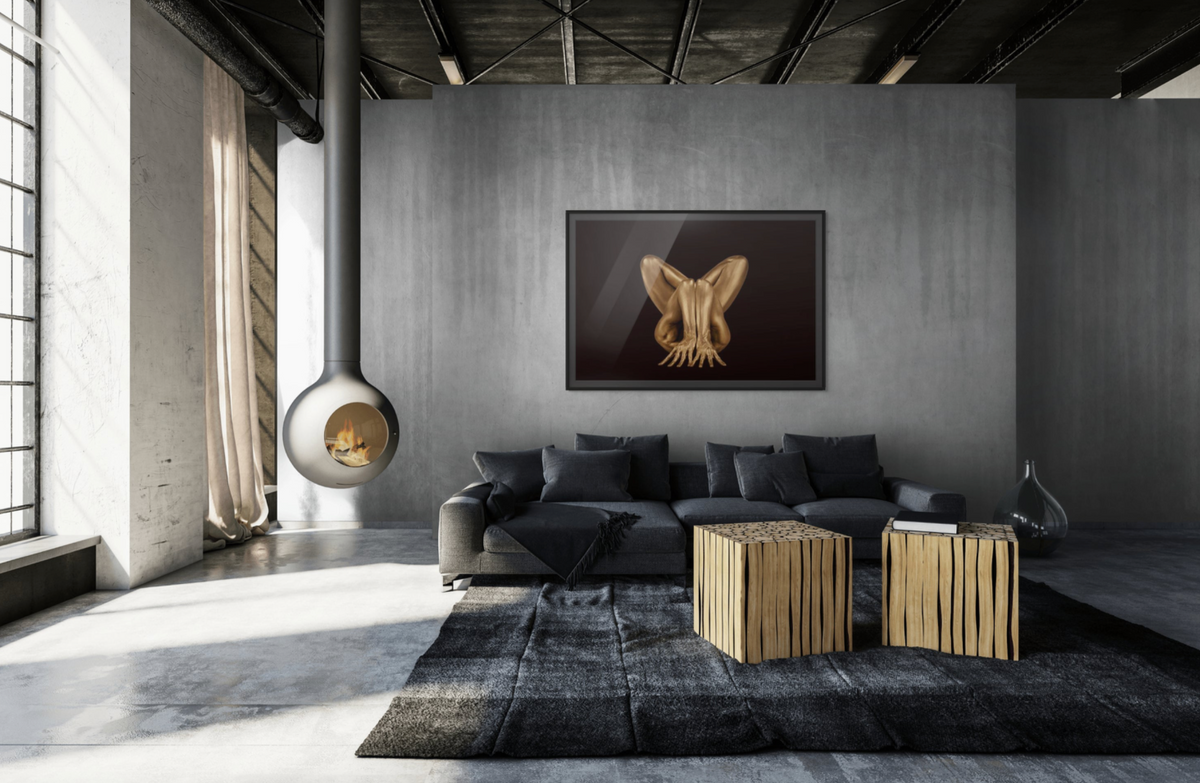
The interior visualization at the beginning of this article shows Hidden Horus against a gray wall above a charcoal sofa. The surrounding neutral materials give the golden figure a distinct focal role. The setting is a mockup rather than a documented installation.
Choose the image for its composition and emotional character as well as its palette. A contemplative figure may suit a quiet seating area; a more expansive gesture may establish focus at an entrance.
Scale and viewing distance also matter. One work can anchor a defined wall section, while a diptych or triptych can establish a wider rhythm when the images form a convincing relationship.
For guidance on these arrangements, read Zack’s guide to fine art diptychs, triptychs, and multi-panel photography.
Evaluate the finished framed dimensions and the lighting the print will actually receive. The golden appearance is captured within the photograph; its presentation in the room depends on the printing surface, glazing, illumination, and surrounding colors.
An Ancient Material, an Ongoing Artistic Conversation
Ancient Egyptian gilding reveals how a thin layer of gold could become part of an object’s visual and symbolic presence. Its meaning emerged through craftsmanship, material, imagery, and purpose.
Zack Zublena’s photography continues a contemporary conversation about why gold draws us toward the human figure. Light creates the first encounter; gesture and expression give that encounter depth.
Explore the Golden Souls collection and Zack Zublena’s available collections. To discuss an artwork or a personal photography experience, contact Zack Zublena.
Frequently Asked Questions
What is ancient Egyptian gilding?
Gilding involves applying a layer of gold to another material. Ancient Egyptian examples include objects combining gold with supports such as wood or stone. Techniques varied according to the object, period, and surface.
Was all ancient Egyptian gold pure 24-karat gold?
No. Ancient Egyptian gold often contained silver, and its composition affected its color. Purity should be established for a specific object rather than assumed from its golden appearance.
Does Zack Zublena recreate ancient Egyptian gilding?
His work is contemporary fine art photography. Ancient Egyptian art is a source of inspiration within a wider artistic practice, rather than a workshop method he claims to reconstruct.
Do the photographic prints contain physical gold?
The golden tones in the photographs record the appearance created during the session. Standard photographic prints do not contain physical gold. Any material embellishment would need to be expressly identified for the particular artwork.
Is 24-karat gold leaf available for a photography experience?
Yes, genuine 24-karat gold leaf is an option for selected creative experiences. Contact Zack to discuss the intended result and an appropriate approach for the session.

Written by Zack Zublena