How to Decorate a Large Wall with Art: Fine Art Photography Guide for Luxury Interiors in Toronto, Vancouver, and Montreal

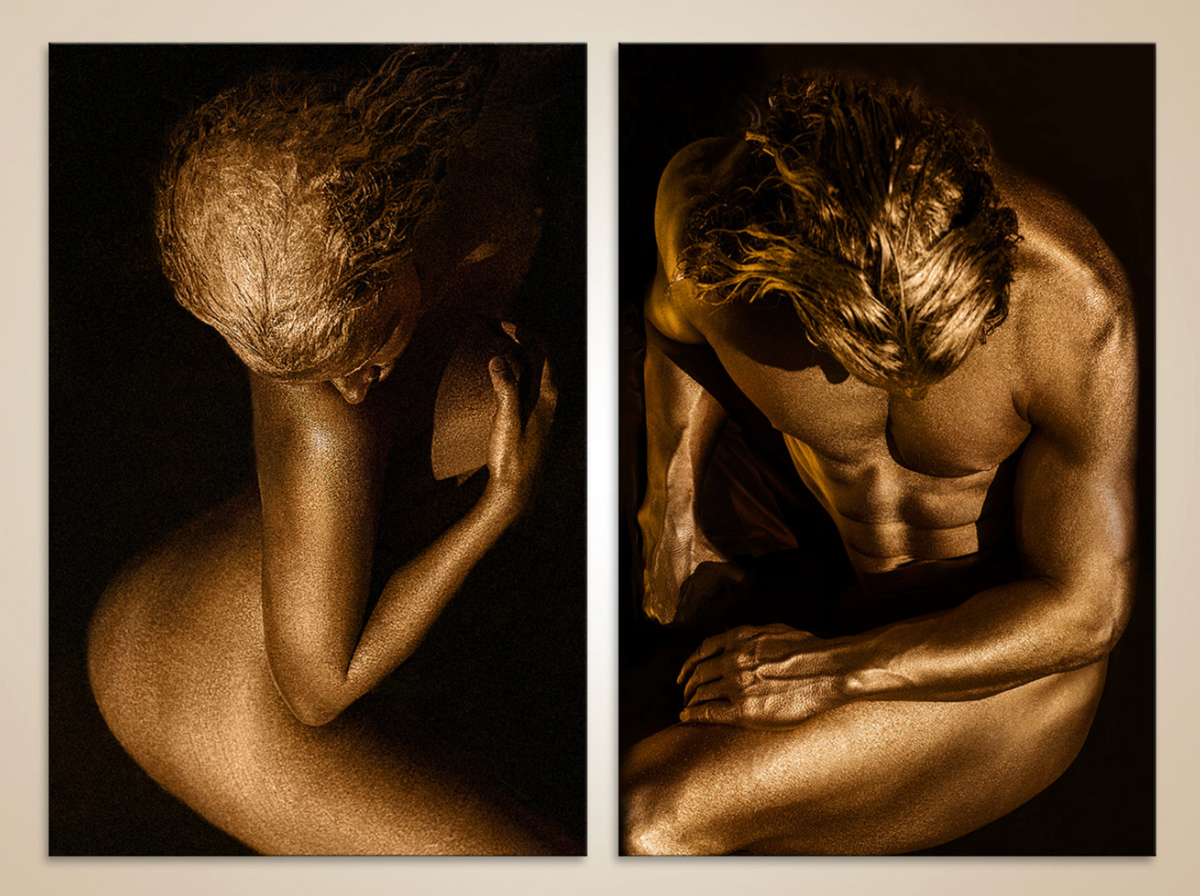
The "Golden Divine Couple" diptych by Zack Zublena. Two independent compositions unified by golden tones, meditative gestures, and deep dark backgrounds. View the artwork.
Expansive luxury penthouses overlooking Lake Ontario in downtown Toronto, architectural waterfront estates in West Vancouver, or historic stone-revamped heritage residences in Old Montreal present extraordinary opportunities and unique design challenges for high-end interior styling in Canada. However, grand architectural scales and soaring ceiling heights alone do not guarantee that an artwork will succeed within a space. No matter how expressive an individual photograph may be, ignoring the surrounding architectural context can dilute its impact, whereas a perfectly proportioned and carefully positioned piece can anchor an entire room with definitive sophistication.
Selecting art for a large-format wall begins with close observation of the artwork and extends to a rigorous analysis of architecture, custom millwork, furniture scale, and natural circulation paths. For interior designers, architects, and discerning art collectors across Canada, integrating Zack Zublena's fine art photography involves achieving a precise visual balance: whether through a commanding vertical portrait or a multi-panel diptych or triptych that defines the rhythmic flow of the entire interior.
The ultimate goal is to select a piece that instantly captures attention upon entering the room while maintaining its profound magnetism year after year.
Understanding the Artwork and Spatial Scale
Before reaching for a measuring tape, spend time contemplating the image in depth. Where does your eye immediately travel? How does the human form occupy the frame? What role does the surrounding negative space play? Does the photograph evoke meditative stillness, vastness, intimate vulnerability, or unyielding strength?
Zack Zublena’s gold figurative photography fuses real human models, sculptural poses, and meticulously controlled studio lighting. The curve of a spine, a restrained gesture, or a brilliant gilded silhouette imparts unmistakable architectural solidity to each piece. Scaling up magnifies this physical presence, but the acquisition decision must always rest on the intrinsic strength of the composition.
An essential resource for cultivating an eye for visual composition and understanding the interaction between body, light, and physical space within Canada's cultural ecosystem is exploring the world-class collections at the Art Gallery of Ontario (AGO) in Toronto or the Montreal Museum of Fine Arts (MMFA). Furthermore, arts, culture, and architecture sections in prominent national media outlets such as The Globe and Mail and National Post offer valuable perspectives on contemporary residential design trends across the country.
When evaluating potential works, ask yourself a vital question: which piece do your thoughts return to repeatedly? That synergy between initial impact and enduring visual fascination forms the bedrock of every permanent residential collection.
Vertical Pieces on Wide Horizontal Walls
A wide wall does not automatically demand a horizontal or landscape-oriented photograph. Large-format vertical artworks function exceptionally well as dominant visual anchors, especially when their central axis aligns precisely with a low sideboard, a custom designer console, or a distinct architectural volume.
Placed above a sleek credenza or within a softly lit architectural niche, a large-scale vertical portrait structures the room and draws the eye upward. True interior harmony is not achieved by covering square meters indiscriminately, but through the exactitude of proportions.
The surrounding negative space—or visual "breathing room"—acts as an active component of the overall composition. This perimeter buffer allows the artwork to detach itself from surrounding furniture and achieve true visual autonomy. Before selecting the maximum possible size, ensure that the scale amplifies the artistic narrative rather than simply filling an empty void.
When a Diptych or Triptych Becomes the Ideal Solution
A diptych consists of two panels; a triptych, of three. These formats make it possible to cover extensive surfaces without creating visual monotony, introducing rhythmic pauses between each section.
While some series distribute a continuous panoramic scene across multiple modules, others interweave independent captures through a unifying conceptual thread. In either case, the connection between the panels must be rigorous and unmistakable.
The "Golden Divine Couple Diptych," featured at the beginning of this article, bridges two autonomous compositions. The golden tones, dark backgrounds, and converging gestures create an ongoing dialogue while allowing each panel to retain its own strict geometry. The viewer’s gaze travels fluidly between both figures before resting on the most delicate nuances of each capture.
Multi-panel works are ideal for double-height living rooms, grand foyers, or expansive residential galleries. The final configuration depends entirely on the atmosphere you wish to project.
Before finalizing exact dimensions, construct full-scale paper mockups and tape them to the wall, accounting for the spacing gaps between panels. It is precisely these intervals that dictate how smoothly the eye travels from one frame to the next. Delve deeper into these setups in Zack’s guide to diptychs, triptychs, and multi-panel photography.
Precise Dimensional Calculations: Framing, Matting, and Surroundings
The dimensions specified in art catalogs typically refer exclusively to the print or paper size, omitting the final volume of the framed artwork. The passe-partout (mat), the thickness of the molding, and the mounting depth substantially increase the overall footprint of the piece on the wall.
Measure your available surface area meticulously, accounting for light switches, ventilation returns, and baseboards. Creating full-size kraft paper templates beforehand prevents scale errors during final installation.
Observe the resulting perimeter from multiple vantage points within the room: the main entrance, primary seating areas, and natural walking paths. This practical test immediately confirms whether the balance is correct or if the artwork should be shifted a few centimeters.
For diptychs and triptychs, marking out every intermediate spacing interval requires millimeter precision. What appears flawless on a computer screen may require adjustment when confronted with real physical architecture.
Adapting to Visual Viewing Distances
A large-format photograph in an open-plan Canadian home must read clearly from a distance, drawing attention through defined silhouettes and balanced tonal contrasts.
Upon closer approach, however, a rich microcosm of textures is revealed: the physical grain of 24-karat gold leaf, subtle gradations of skin tone, and the precise anatomical poise of every posture. This multi-layered viewing experience ensures the artwork remains compelling and relevant over decades.
When planning your layout, consider the everyday usage patterns of the space. In a reception foyer or primary hallway, long-range visual impact is paramount; above a sofa or in a quiet reading corner, tactile close-up details take center stage.
To broaden your perspective on how art integrates into contemporary design and architecture, consulting specialized lifestyle publications and architectural reviews in premier Canadian media channels such as Canadian Architect and design journals provides excellent contextual insight.
The Dialogue Between Gold and Contemporary Canadian Architecture
The radiant gold tones present in Zack Zublena’s pieces establish a warm synergy with the noble materials characteristic of high-end architecture and interior design in Canada: rich Canadian walnut and white oak, natural stone, exposed concrete accents, brushed metals, and refined artisanal finishes.
Against deep, dark backgrounds—such as graphite gray, midnight green, or deep navy—the gold-adorned human form acquires a monumental, restrained, and timeless presence.
There is no need to match the golden hue in every decorative accessory within the room; true elegance stems from the balanced contrast between warm and cool textures, and the tension between organic bodily curves and architectural geometry.
Avoid acquiring art driven solely by a passing seasonal color palette. Great artworks endure and appreciate through their conceptual depth, compositional rigor, and lasting emotional resonance.
Museum-Grade Lighting: Protection and Presentation
Observe how natural light moves across the wall throughout the day. Direct sunlight streaming through grand architectural windows can cause unwanted glare and degrade materials over time, whereas thoughtful evening artificial lighting should subtly emphasize shadows and volumetric contours.
It is recommended to use track lighting with high Color Rendering Index (high-CRI) LED projectors, avoiding fixtures that emit excessive heat. International photographic preservation standards, aligned with heritage conservation guidelines upheld by institutions such as the Canadian Heritage Information Network, advise using specialized UV-protective glass to ensure the longevity of the artwork.
The objective is not to flood the wall with direct illumination, but to create a delicate focal accent that preserves dramatic contrast and rich detail in shadowed areas.
Framing as the Formal Closure of the Piece
The frame acts as the ultimate threshold between the photographic universe and the surrounding architecture. A minimalist, deep-set shadowbox molding concentrates all focus on the image itself, while a heavier profile introduces solid structural presence.
Consider the depth of the molding profile in relation to overall paper dimensions. For multi-panel series, utilizing identical framing specifications is a non-negotiable requirement to preserve visual cohesion.
Consult with professional-grade framing studios to ensure the use of acid-free, museum-quality materials. For large-format pieces of substantial weight, a secure, concealed wall-mounting system is an absolute technical necessity.
Art That Accompanies and Transforms Daily Life
A thoughtfully selected artwork for a prominent wall evolves alongside the home. Over time, changing ambient light playing across the gold leaf will reveal new nuances, gestures will acquire deeper layers of meaning, and the piece will firmly establish itself as the aesthetic heartbeat of the space.
Whether you choose a striking vertical portrait or a harmonious multi-panel set, the true value of the choice lies in the emotional connection it sparks. Architecture defines physical boundaries, but art infuses a space with soul and presence.
We invite you to explore Zack Zublena’s Golden Souls collection and fine art diptychs and triptychs. For inquiries regarding available sizes, exclusive editions, and personalized residential curation, please get in touch directly with Zack Zublena.

Written by Zack Zublena