
Article: Zack Zublena and César Giraldo: Blue and Gold Fine Art at The Cellar Beverly Hills
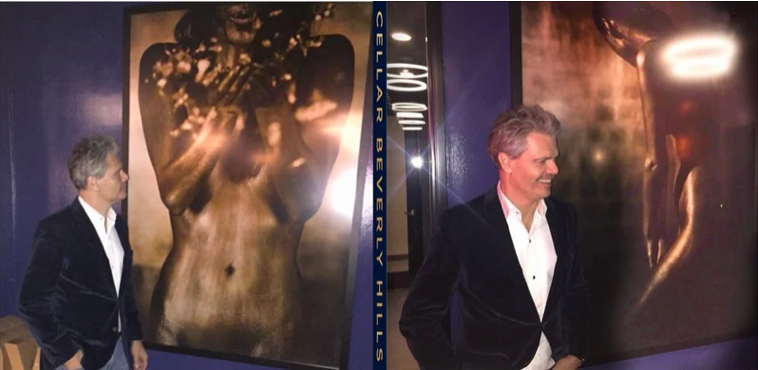
Zack Zublena and César Giraldo: Blue and Gold Fine Art at The Cellar Beverly Hills
In Beverly Hills, an artwork has to hold its own within an interior shaped by strong materials, color, and atmosphere. At The Cellar Beverly Hills in 2018, interior designer César Giraldo created a striking blue-and-gold setting. Large-format photographs by Zack Zublena were selected to complement it, bringing luminous human figures into dialogue with the room’s palette.
This archive feature looks at that collaboration through the questions designers and art buyers face today: How does a photograph relate to an established interior? What changes when its scale becomes part of the room’s visual identity? And how should color and light be assessed before a work is selected for a hospitality space?
A Beverly Hills Collaboration in Blue and Gold
The Cellar project brought together two distinct practices. César Giraldo designed the interior; Zack Zublena’s fine art photography was selected for that setting. In the photographs, real people painted with reflective gold-colored body paint become sculptural figures through pose, composition, and carefully directed light.
Against The Cellar’s blue-and-gold design, the figures’ warm tones offered a visual connection to the space without disappearing into it. The Smithsonian’s Cooper Hewitt design museum explores how color and form work together—a useful perspective when considering why an artwork can feel at home in a room while retaining its own presence.
For photographs and further background on the installation, see our earlier article, Zack Zublena Fine Art Photography at The Cellar Beverly Hills.
Why Scale Changes the Experience of Fine Art Photography
The earlier account identifies the works selected for The Cellar as 46 × 72-inch prints. At that size, a photograph can become a substantial visual presence. Its effect depends on more than its dimensions: the surrounding wall, nearby furnishings, and the points from which guests first see it all influence the experience.
Before selecting a large-format print for a restaurant, hotel, lounge, or residence, consider the full installed dimensions, including framing. View a proposed placement from the entrance, from seated positions, and while moving through the room. The American Society of Interior Designers’ design resources place this kind of attention to people’s experience within the wider practice of interior design.
Color, Lighting, and the Finished Print
Gold can appear warm and radiant against deep blue, but a screen cannot show exactly how a finished print will read under a room’s lighting. Nearby surfaces, reflections, and viewing angles also matter. The Getty Conservation Institute’s exhibition lighting case studies show how carefully institutions evaluate light and color when presenting art.
Framing and placement deserve the same attention. The Library of Congress offers guidance on matting and framing and explains how light exposure can affect works on paper. Discuss suitable materials and the intended location with a professional framer for the specific print you choose.
In a public-facing interior, artwork must also sit comfortably within the space people use. The U.S. Department of Justice’s ADA design standards provide the authoritative reference for physical accessibility; the project’s design team should account for applicable requirements when planning a commercial installation.
Real People Behind the Golden Figures
Zublena’s work begins with a person in front of the camera. Reflective gold-colored body paint, guided posing, and controlled lighting create the appearance seen in the photograph. The prints contain no physical gold, and the figures are not generated by AI. Learn more about his process on Crafted by Hand, Not A.I. — Real People.
Photography has a long-standing place in American art collections, including the Smithsonian American Art Museum’s photography collection. At The Cellar, Zublena’s photographs were experienced in a designed interior, where the presence of the human figure could be encountered alongside the room’s color, materials, and furnishings.
From One Interior to a Wider Collection
The Cellar remains a specific chapter in Zublena’s history: a Beverly Hills project shaped by Giraldo’s interior design and a selection of gold-toned photographs. His work has since been installed as part of the interior decoration of more than 120 David Lloyd Clubs across the United Kingdom and continental Europe.
For an upcoming residential or hospitality project, explore the Golden Souls collection and consider which work speaks to the setting as art as well as through its color. To discuss available photographs, scale, and your project’s requirements, contact Zack Zublena.

Written by Zack Zublena

